
Dachshund South Africa: The Complete Breed Guide
When researching the Dachshund South Africa community, you will quickly discover that this iconic breed is celebrated under many affectionate local names. Whether you call them a “Daxie,” a “Sausage Dog,” or the traditional Afrikaans “Worshond,” or “Worsie” the Dachshund is undeniably one of the most recognizable and deeply loved companion dogs in the country. Originally bred in Germany to track and hunt badgers below ground, today’s Dachshund is an intelligent, loyal, and incredibly comical family member.
Whether you are trying to understand the distinct differences between a Standard and a Miniature, or you are captivated by the unique Dapple or Chocolate Dachshund color variations, understanding the specific physical and mental needs of a Dachshund in South Africa is vital. Their unique anatomy requires specialized care, and equipping yourself with expert knowledge is the first step toward a healthy, long-lasting bond.
| Breed Characteristic | Specification |
|---|---|
| Origin | Germany (15th Century) |
| Average Weight | Standard: 9 kg to 12 kg | Miniature: 3 kg to 5 kg |
| Average Height | Standard: 20–27 cm | Miniature: 13–18 cm at the shoulder |
| Lifespan | 12 to 16 years |
| Coat Variety | Smooth (Short-Haired), Longhaired, and Wirehaired |
| Primary Colors | Red, Black & Tan, Chocolate & Tan, Fawn (Cream), Dapple, Brindle |
| Registration Body | Kennel Union of South Africa (KUSA) – Hound Group (View Official Breed Standard) |
History and Original Purpose
Developed in Germany during the 15th century, the Dachshund was bred for one clear purpose: to track, corner, and flush out badgers (Dachs) in their underground dens. Their unique elongated bodies, short muscular legs, and broad, paddle-like front paws allowed them to tunnel underground efficiently. Their loose skin was bred to let them maneuver within tight underground corridors without tearing, while their deep, resonant bark was bred intentionally so that human handlers could track their underground location from the surface.
Over time, smaller variations were selectively bred to hunt rabbits and weasels, leading to the Miniature variety. This working lineage explains the Daxie’s strong prey drive, persistence, and bold character.
Standard vs. Miniature Dachshund South Africa: Understanding the Difference
One of the most frequent questions from prospective owners is how to classify the sizes. In South Africa, the breed is officially categorized by the Kennel Union of South Africa (KUSA) into two main sizes, primarily determined by chest circumference and weight at maturity (15 months):

The Standard Dachshund
The original, robust working dog.
They weigh between 9 kg and 12 kg and possess a deep chest. They are strong dogs capable of physical stamina.
The Miniature Dachshund
Bred down in size to hunt smaller prey like rabbits, the Mini Daxie usually weighs an ideal 3 kg to 5 kg. Despite their tiny stature, they share the same courageous, “big dog” temperament as their Standard counterparts.
(Note: While some international registries recognize a third “Kaninchen” or Rabbit size. KUSA strictly recognizes Standard and Miniature)
Understanding Coat Variations: Standard vs. Exotic Colors
Coat Types & KUSA Standard Accepted Colors
Dachshunds are diverse in their appearance, presenting in three distinct coat varieties:

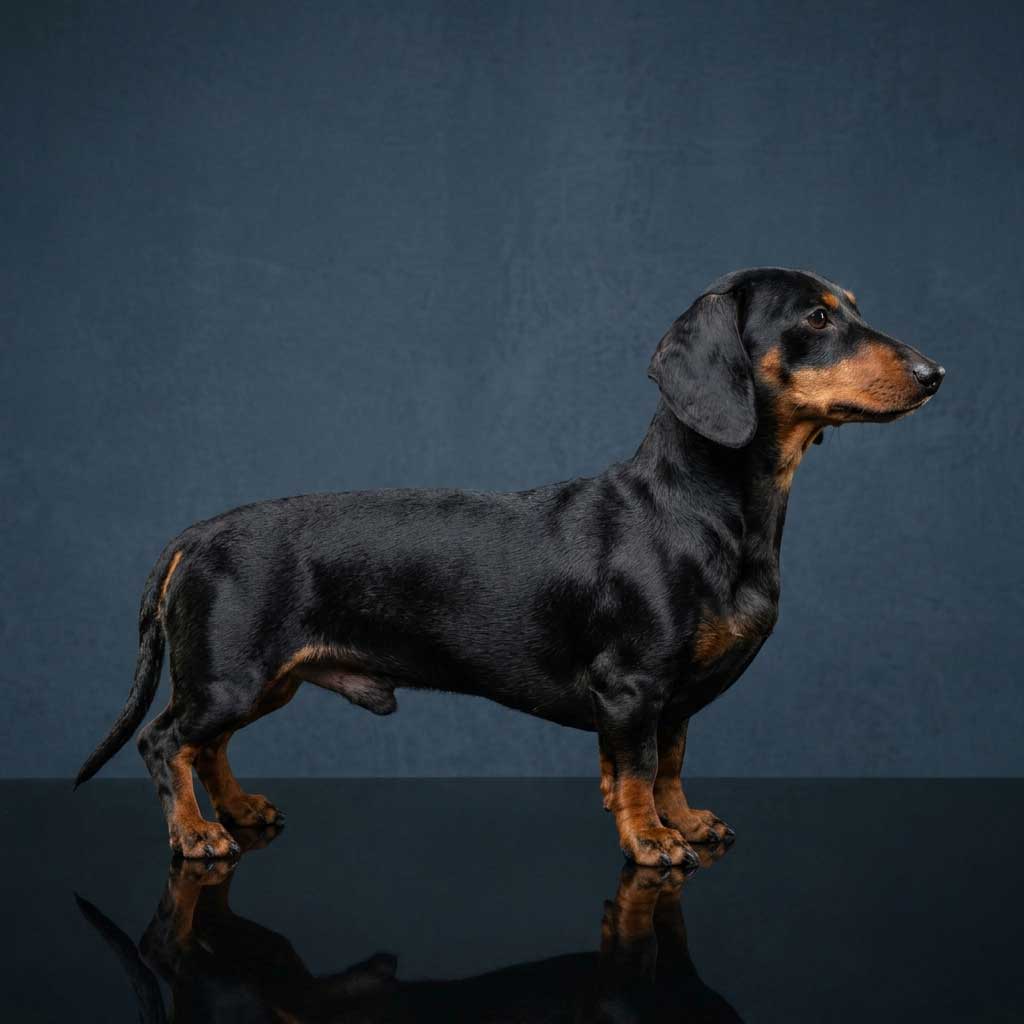
Smooth (Short-Haired)
Sleek, glossy, and tightly fitting. This is the classic coat that requires minimal grooming.
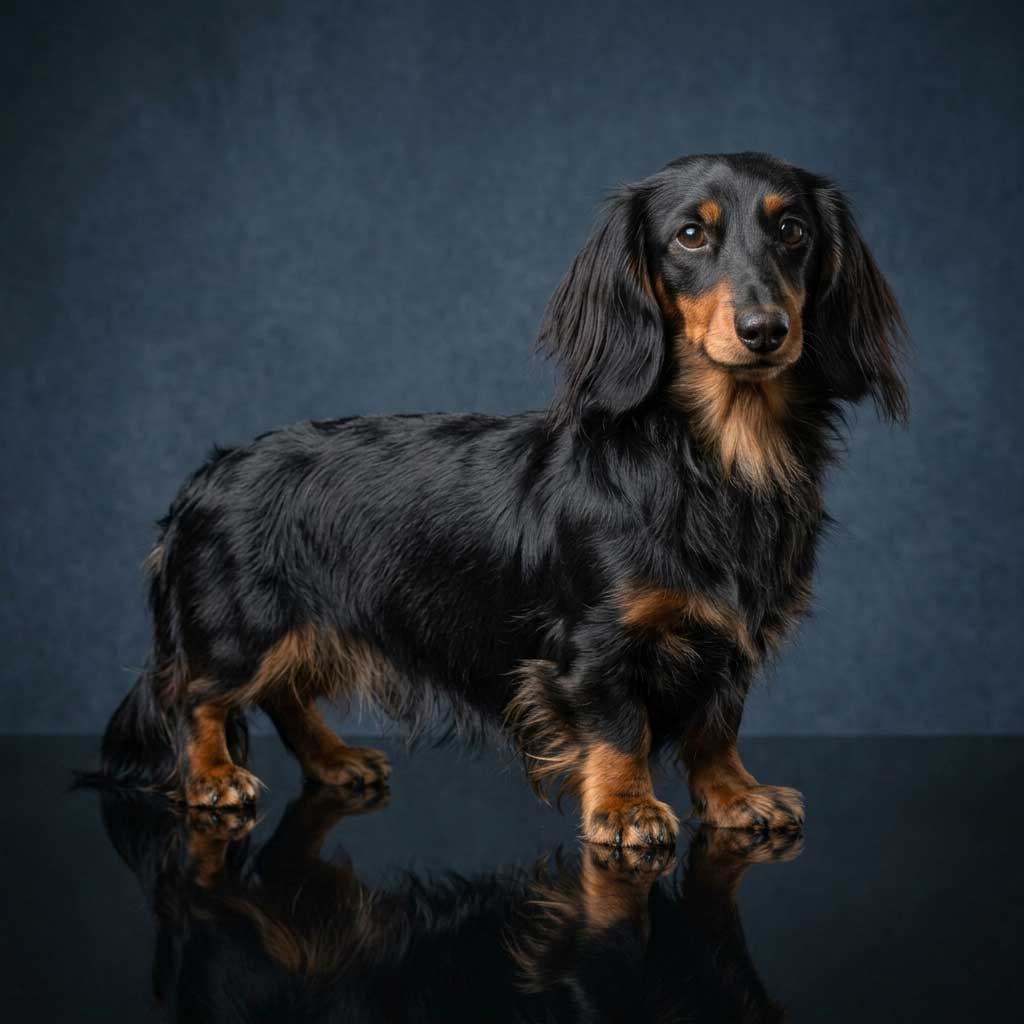
Longhaired
Elegant, soft, and slightly wavy coat featuring feathering on the ears, chest, and tail. These dogs are often noted for having a gentle temperament.

Wirehaired
A harsh, thick, double coat characterized by a protective undercoat, a prominent beard, and bushy eyebrows, reflecting their terrier heritage.
The standard colors officially recognized and accepted by KUSA include:

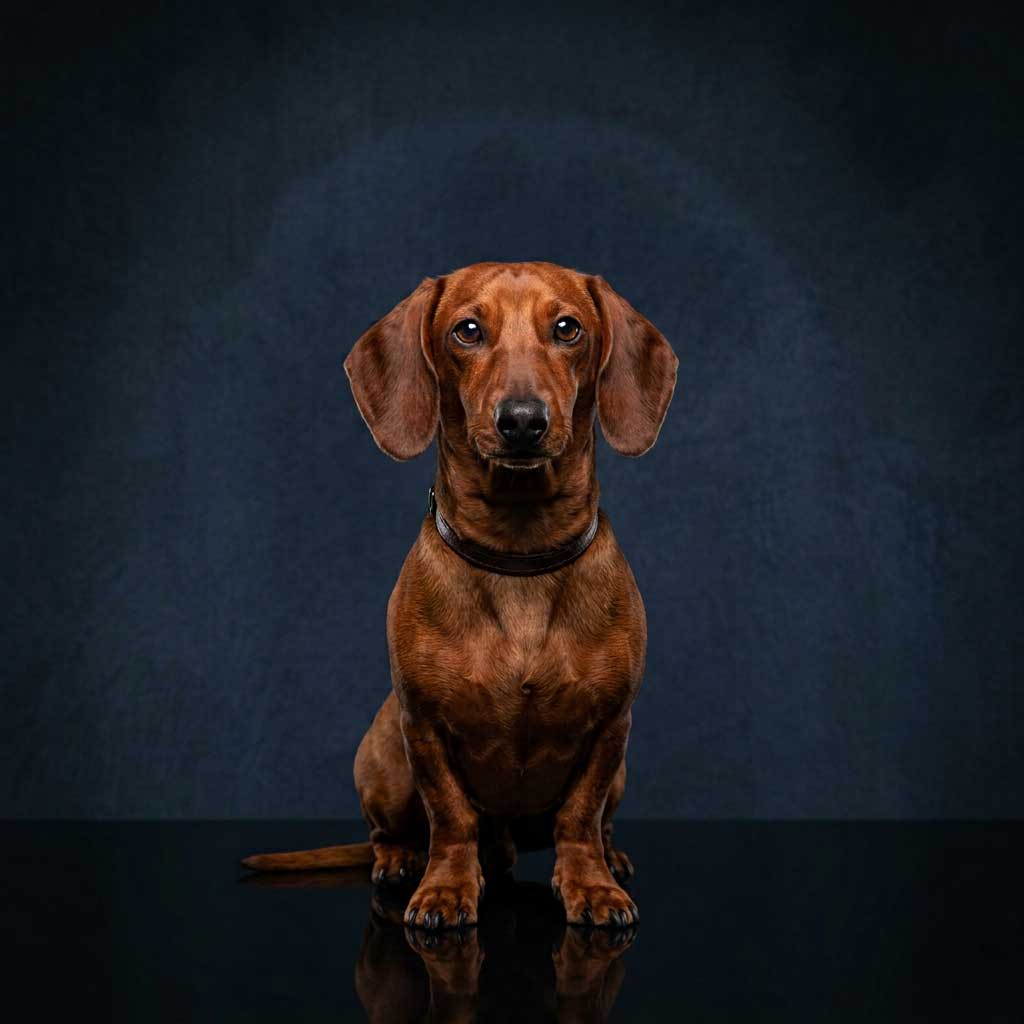
Red / Clear Red
Solid reddish tones ranging from gold to deep mahogany.

Black & Tan
A deep, jet-black base coat with clean, rust-tan markings on the muzzle, chest, legs, and above the eyes.
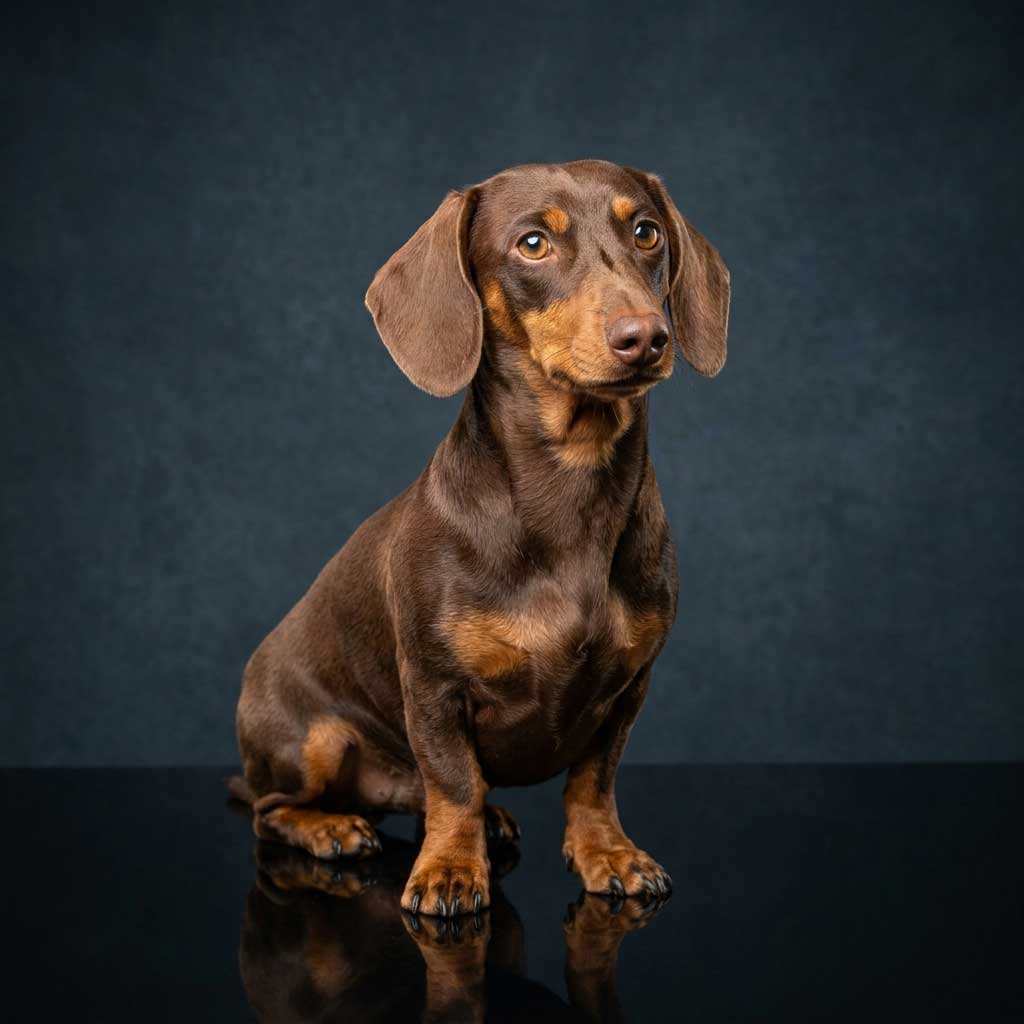
Chocolate & Tan
Known formally as Chocolate & Tan, these dogs lack the black pigment gene. Their base coat is a rich, warm brown, accompanied by amber eyes and a brown nose.

Cream / Fawn
Highly sought-after in South Africa, this elegant shade ranges from a soft, clear cream to a warm fawn, often displaying subtle dark shading on the ears.

Dapple (Merle)
A genetic pattern that creates irregular, lighter patches (such as silver-grey on a black base) across the coat.

Brindle
A subtle striping pattern resembling tiger stripes, where darker hairs intermingle with a lighter base color.
⚠️ Genetic & Health Alert
Exotic Colors & Double Dapple Risks
While alternative color patterns are often marketed as rare or exotic, some carry serious physiological consequences. Responsible owners should be aware of the following variations:
- Blue & Tan / Lilac & Tan: These dilute shades are caused by a recessive gene that weakens black pigment. This genetic makeup is strongly linked to Color Dilution Alopecia (CDA), which can cause permanent hair loss and chronic skin infections.
- Double Dapple (Double Merle): When two dapple Dachshunds are bred together, their offspring have a 25% chance of inheriting two copies of the dapple gene. This double-dosage inhibits normal cellular development, frequently resulting in puppies born with significant white patches, congenital blindness, malformed or missing eyes (microphthalmia), and absolute deafness.
Anatomical Spotlight
What is IVDD (Intervertebral Disc Disease)?
Because of their chondrodystrophic (dwarfism) genetics, Dachshunds have extremely long spines supported by very short legs. This makes them highly susceptible to Intervertebral Disc Disease (IVDD), where the shock-absorbing discs between the vertebrae prematurely calcify, bulge, or burst. This causes excruciating pain, nerve damage, and can lead to permanent rear-leg paralysis. Protecting their back is the single most important aspect of Daxie ownership. Learn more in our Dog Anatomy & Breed Terminology Guide.
Everyday Care | Exercise | Diet
Physical Activity Requirements
Despite their short legs, Dachshunds are scent hounds with high stamina. Two daily walks of 20 to 30 minutes are recommended to build and maintain the core abdominal and spinal muscle strength necessary to support their long backs. Mental stimulation, such as scent games or snufflemats, is also highly beneficial to satisfy their tracking instincts.
Protecting the Dachshund Spine
Because of their chondrodystrophic structure, protecting their spine from jarring impacts is a lifetime responsibility
- Zero Jumping Policy:
Jumping off furniture, beds, or out of vehicles is a common trigger for spinal disc herniation. Padded dog ramps are essential for elevated surfaces. - The Supporting Lift:
Never lift a Dachshund under their armpits. Always scoop one hand under their chest and the other under their hindquarters, keeping their spine level and fully supported. - Vigilant Weight Management:
Excess weight sags their midsection, bowing the spine and putting pressure on their vertebrae. Feed a precise, high-quality diet and keep them in a lean condition where you can easily feel their ribs and see a distinct waistline.
Diet & Nutrition Needs
Maintaining a strict nutritional regimen is a key component of preventative health for a Dachshund. Because obesity directly compounds their risk for spinal injury, caloric intake must be monitored carefully.
- Portion Control:
Avoid free-feeding. Measure their daily meals using a kitchen scale rather than estimating portions. - Nutrient Profile:
They thrive on high-quality, small-breed specific diets rich in lean proteins to maintain muscle tone without adding excess fat. - Spinal & Joint Support:
Look for formulations that contain naturally occurring glucosamine, chondroitin, and Omega-3 fatty acids (like EPA and DHA) to assist in preserving joint cartilage and maintaining healthy spinal discs.
Swimming and Pool Safety in South Africa
A common misconception is that all dogs are natural swimmers. For Dachshunds, open water presents a significant hazard.
- Anatomical Limitations:
Their short limbs provide very little propulsion, while their deep chest and heavy, elongated body make it difficult to keep their head above water. They tire quickly and are prone to drowning. - Pool Barriers:
In South African homes with swimming pools, secure fencing, safety nets, or pool covers are essential. - Safety Equipment:
If your Dachshund is near open water, they should always wear a properly fitted canine life jacket. Supervision around water must be absolute.
Grooming & Coat Maintenance
- Smooths:
Require a weekly brush with a rubber grooming mitt to manage mild shedding. - Longhairs:
Require brushing two to three times a week, paying close attention to the fine hair behind their ears and around their legs, which is prone to matting. - Wirehairs:
Require regular brushing and professional “hand-stripping” (plucking dead hair) twice a year to maintain the correct, weather-resistant texture of their coat. - Ear Hygiene:
Their drop ears trap moisture and debris. Weekly checks and gentle cleaning with a vet-approved ear cleanser are vital to prevent yeast infections.
Training and Socialization
Trainability and Scent Hound Temperament
Dachshunds are clever but possess an independent, stubborn streak bred from centuries of working alone underground. They do not respond well to repetitive, boring training or harsh corrections, which can cause them to disengage entirely. Training requires patience, consistency, and high-value rewards to convince them to cooperate.
Vocalization and Alert Watchdog Instincts
Possessing a deep, booming bark that sounds like it belongs to a dog twice their size, Dachshunds make alert watchdogs. However, their instinct to sound the alarm can escalate into nuisance barking. Teaching a reliable “quiet” or redirect command early in puppyhood is highly recommended.
Socialization Needs
Because of their loyalty, Dachshunds can become protective of their primary human and aloof or reactive toward strangers and other dogs. Positive exposure to various people, sounds, environments, and other pets from a young age is essential to build a stable adult.

Common Breed-Specific Health Considerations
Intervertebral Disc Disease (IVDD)
This is a degenerative spinal condition where the shock-absorbing discs between the vertebrae prematurely calcify, bulge, or rupture, potentially causing paralysis. It affects up to 1 in 4 Dachshunds due to their dwarfism genetics.
- Learn more about symptoms, surgical options, and grading scales in our IVDD Terminology Guide.
Chondrodystrophy
This inherited skeletal growth condition is responsible for the breed’s short, curved limbs and elongated body. This genetic dwarfism trait causes their spinal discs to calcify and degenerate prematurely.
- Learn more about structural genetics in our Chondrodystrophy Terminology Guide.
Progressive Retinal Atrophy (PRA)
An inherited, bilateral genetic condition that causes the slow, progressive degeneration of the retina, eventually leading to complete blindness. It is highly prevalent in Miniature Smooth and Longhaired lines.
- Learn more about genetic inheritance patterns in our PRA Terminology Guide.
Pes Varus
A developmental orthopedic deformity of the hind limbs where premature closure of the distal tibial growth plate causes the lower leg to bow inward, creating a “club-foot” appearance.
- Learn more about corrective surgical procedures in our Pes Varus Terminology Guide.
Granulomatous Meningoencephalomyelitis (GME)
An inflammatory, progressive autoimmune disease of the central nervous system that small dog breeds, including Miniature Dachshunds, are genetically predisposed to. It affects the brain and spinal cord, presenting with sudden neurological symptoms such as loss of balance, head tilting, or seizures.
- Learn more about GME treatment and diagnosis in our GME Terminology Guide.
Rehoming or Adopting a Dachshund
Because they form close, single-owner or family bonds, Dachshunds are sensitive to sudden changes in their environment. The stress of a traditional, noisy rescue kennel can trigger severe separation anxiety, behavioral regression, and physical injury to their delicate backs.
At Small Dog Adoptions & Rehoming, we recognize the unique psychological and physical needs of the breed. We facilitate a 100% cage-free, direct home-to-home rehoming model. This professional approach ensures that Dachshunds bypass the shelter system entirely, transitioning directly from one loving private home to another. This maintains their emotional stability and keeps them safe from physical stress.
Dachshund Frequently Asked Questions
Deciding to bring a “Worsie” into your family often comes with many practical questions regarding their unique physiology and active temperament. Below, we address the most common inquiries from South African owners to help you prepare your home and lifestyle for this delightful breed.

Final Thoughts: Is the Dachshund Right for Your Home?
Welcoming a Dachshund into your life is a commitment to guarding their physical health and outsmarting their fierce scent-hound intelligence. If you are prepared to manage their environment with ramps, maintain a strict diet, and guide their loyal, determined temperament, you will be rewarded with a companion of deep devotion and endless entertainment.
Whether you are looking to adopt or need professional, compassionate guidance on rehoming a family Daxie, our private consultancy is here to support you at every stage.
Are you looking to welcome a Dachshund into your life?
- 🐾 View Our Available Dogs for Adoption
- 📧 Get in Touch with Small Dog Adoptions & Rehoming, if you have any questions or need advice about our home-to-home rehoming process.