The Complete Guide to the Miniature Pinscher in South Africa
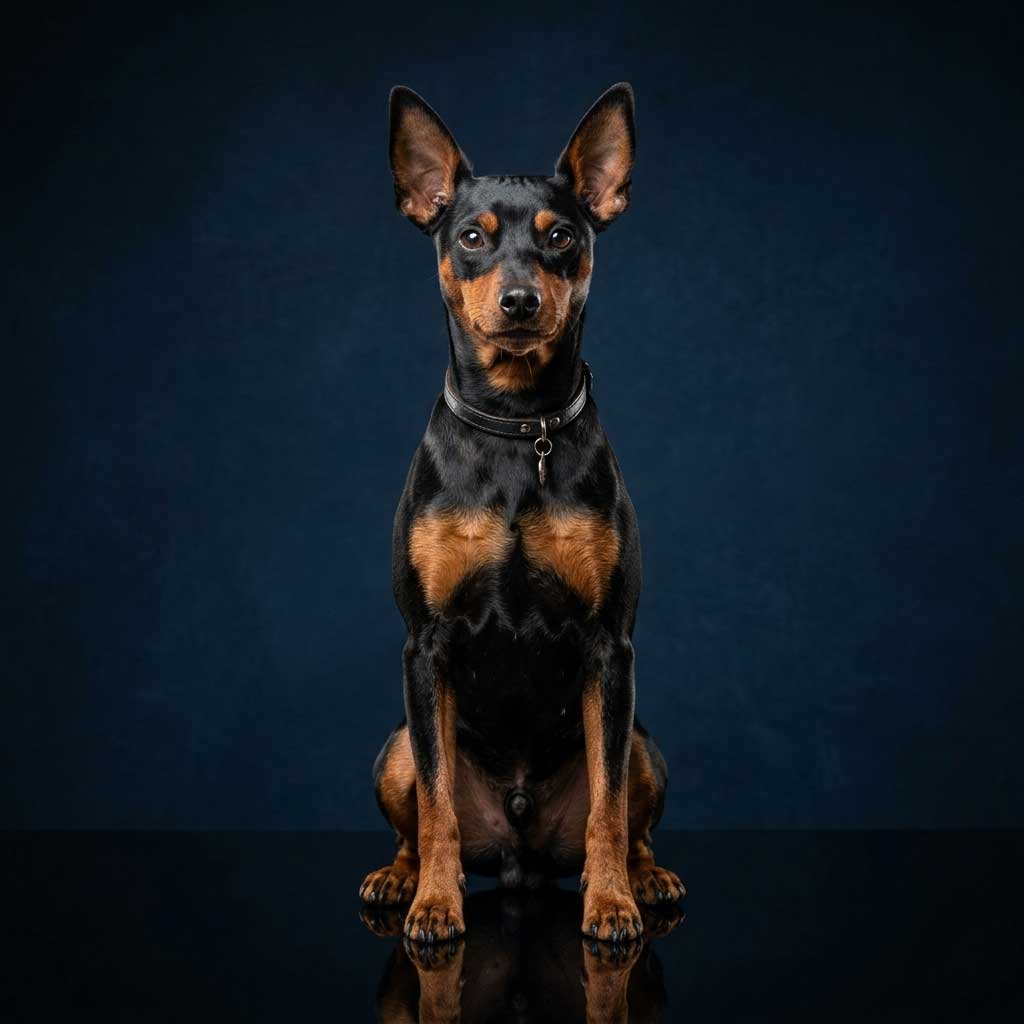
The Miniature Pinscher—affectionately known to millions of pet owners simply as the “Min Pin”, and widely celebrated in South Africa as the “Bokkie-hond” (or Bokkie) — is one of the most vibrant, fearless, and entertaining small dog breeds in South Africa. Globally crowned as the “King of Toys,” these tiny dogs possess a commanding presence that completely defies their size. Characterized by their compact, wedge-shaped heads, sleek athletic frames, and distinct high-stepping “hackney” gait, they truly are a big dog in a small package.
Whether you are researching the breed to determine if their high-energy physical traits align with your household’s lifestyle, or you are looking for specific regional information on their care, understanding a Miniature Pinscher in South Africa is vital for any prospective owner looking to welcome one into their home.
History and Original Purpose
Despite a very common misconception in South Africa, the Miniature Pinscher is not a bred-down “Miniature Doberman.” In fact, historical records prove that the Miniature Pinscher is the much older breed, having been developed in Germany centuries before Louis Doberman bred the large Doberman Pinscher.
Originally developed to hunt rats and small vermin in German stables and outhouses, the Min Pin was bred by crossing small smooth-coated terriers, Italian Greyhounds, and Dachshunds. This heritage explains their intense prey drive, lightning-fast reflexes, and boundless bravery. They were built to work independently, a trait that translates into the fiery, confident companions we see today.
Understanding Coat Variations: Standard vs. Exotic Colors
When looking at Miniature Pinschers in South Africa, you will encounter a wide array of coat colors and genetic patterns. It is crucial to understand the difference between standard recognized variations and the highly sought-after “exotic” colors, as coat genetics often link directly to specific health care requirements.
Standard / Recognized Colors
(Highly accepted for showing & breeding)
The Kennel Union of South Africa (KUSA) officially recognizes a specific spectrum of colors within the breed standard. These include:
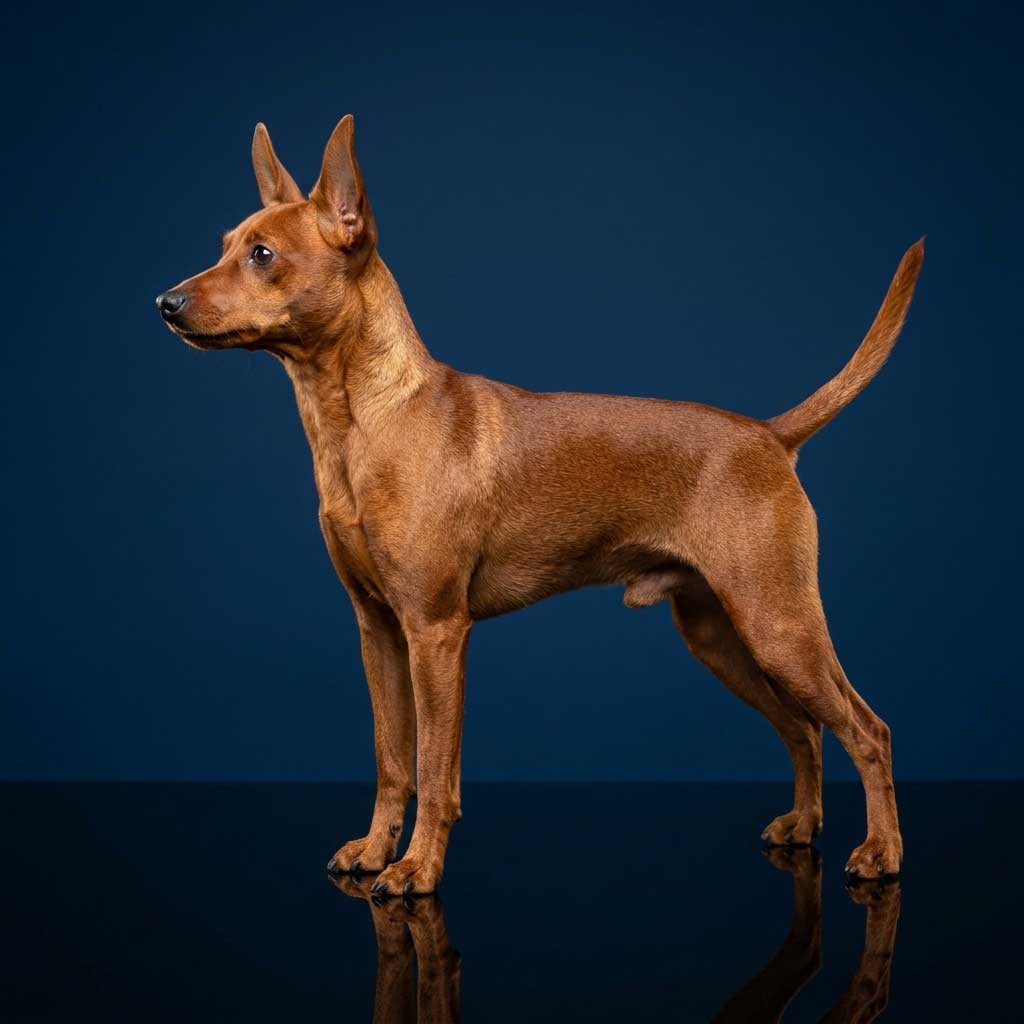
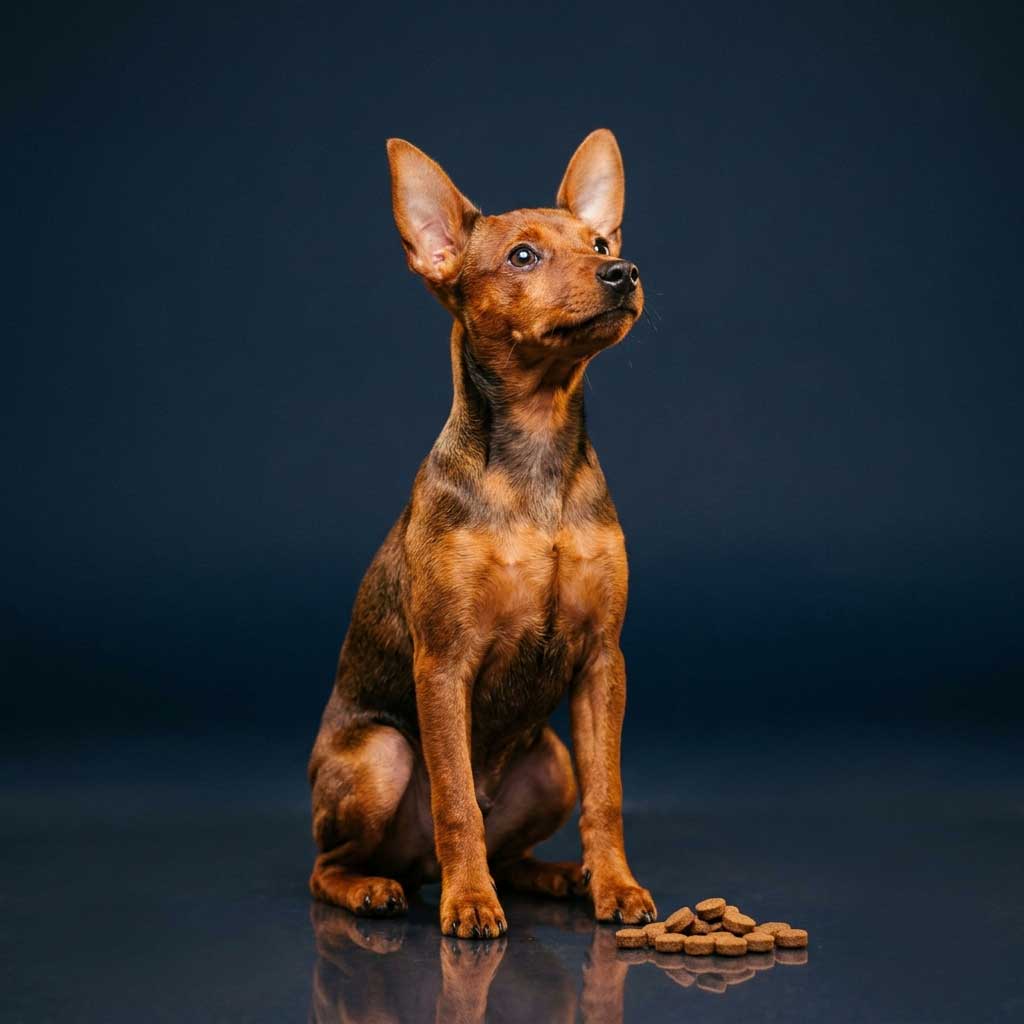
Solid Clear Red:
(or Deer Red)
A vibrant, rich reddish-brown coat of various shades, completely uniform across the body without any black hair.
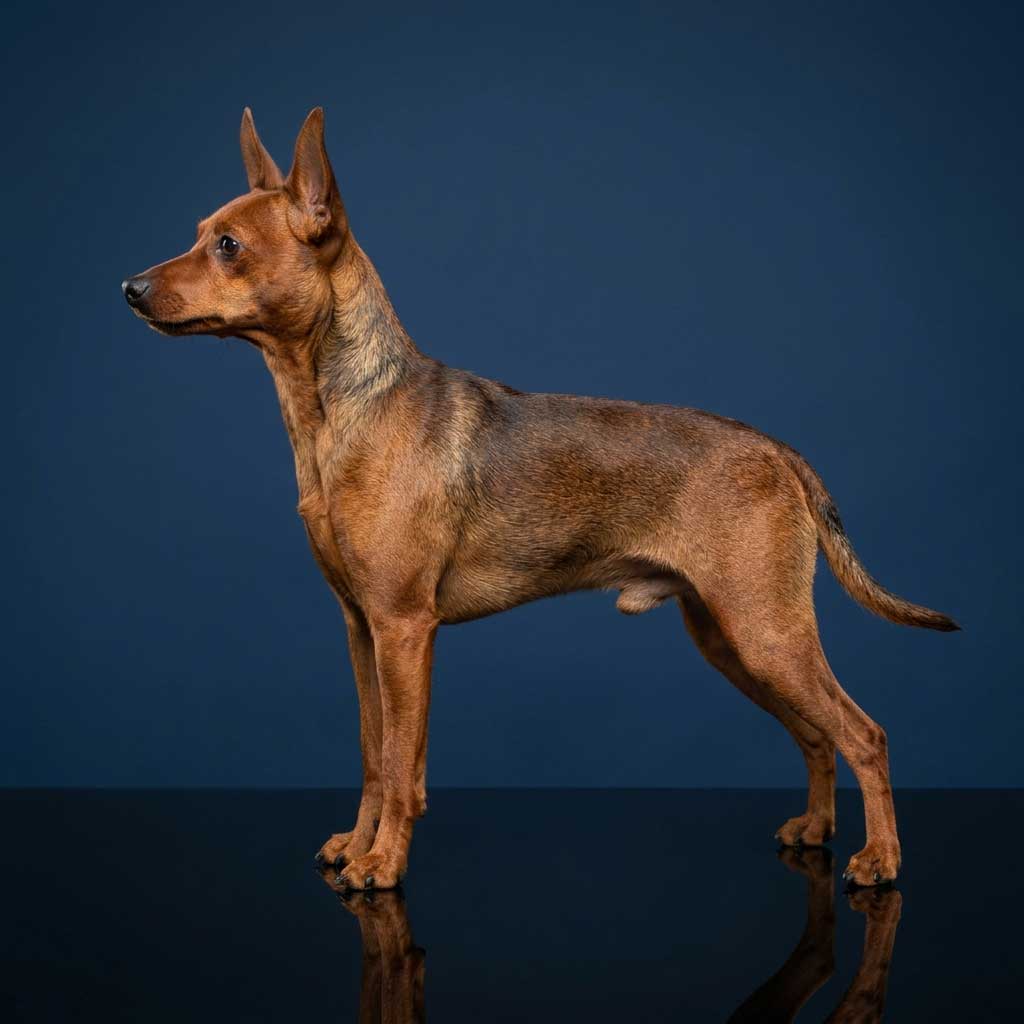
Stag Red:
A beautiful, warm red base coat interspersed with sweeping black hairs along the neck, shoulders, and back, creating a “sable” effect.
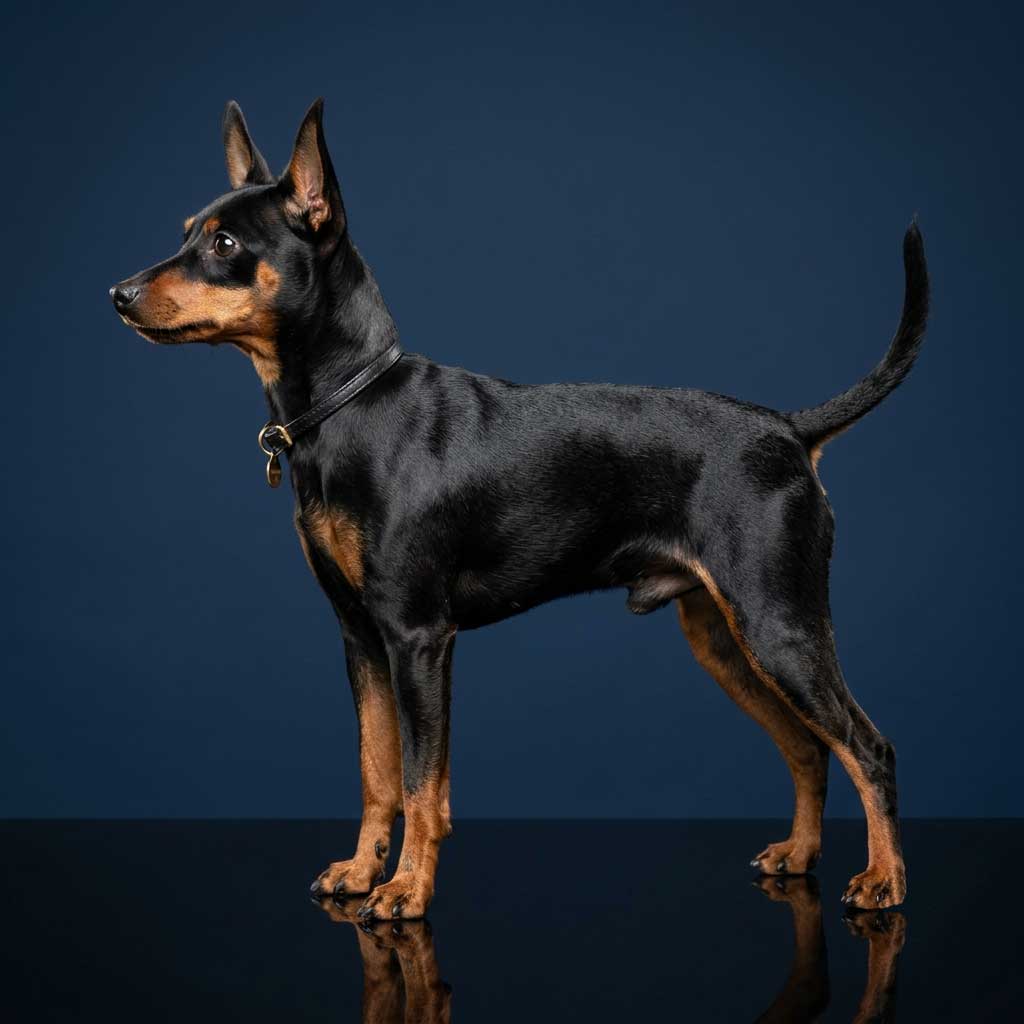
Black & Tan:
A sleek, glossy black base coat paired with sharply defined, vibrant rust-tan markings over the eyes, on the cheeks, chest, legs, and feet.
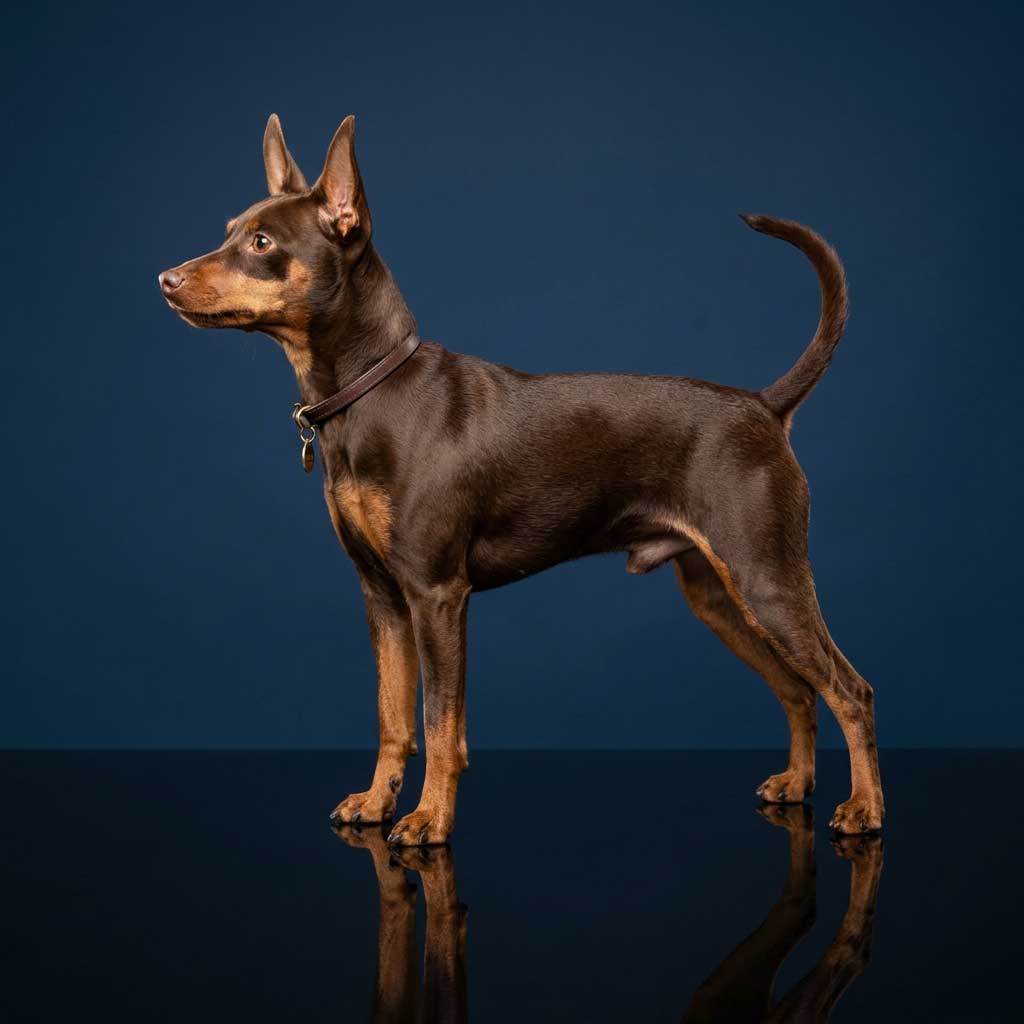
Chocolate & Tan :
A warm, rich chocolate-brown base coat paired with clean, sharply defined rust-tan markings in the classic pinscher pattern.
Non-Standard / Exotic Colors
(Not accepted for KUSA showing, but popular as pets)
Through specific genetic selection, breeders have introduced several alternative variations that are incredibly popular but are classified as “Non-Standard” by traditional kennel clubs.
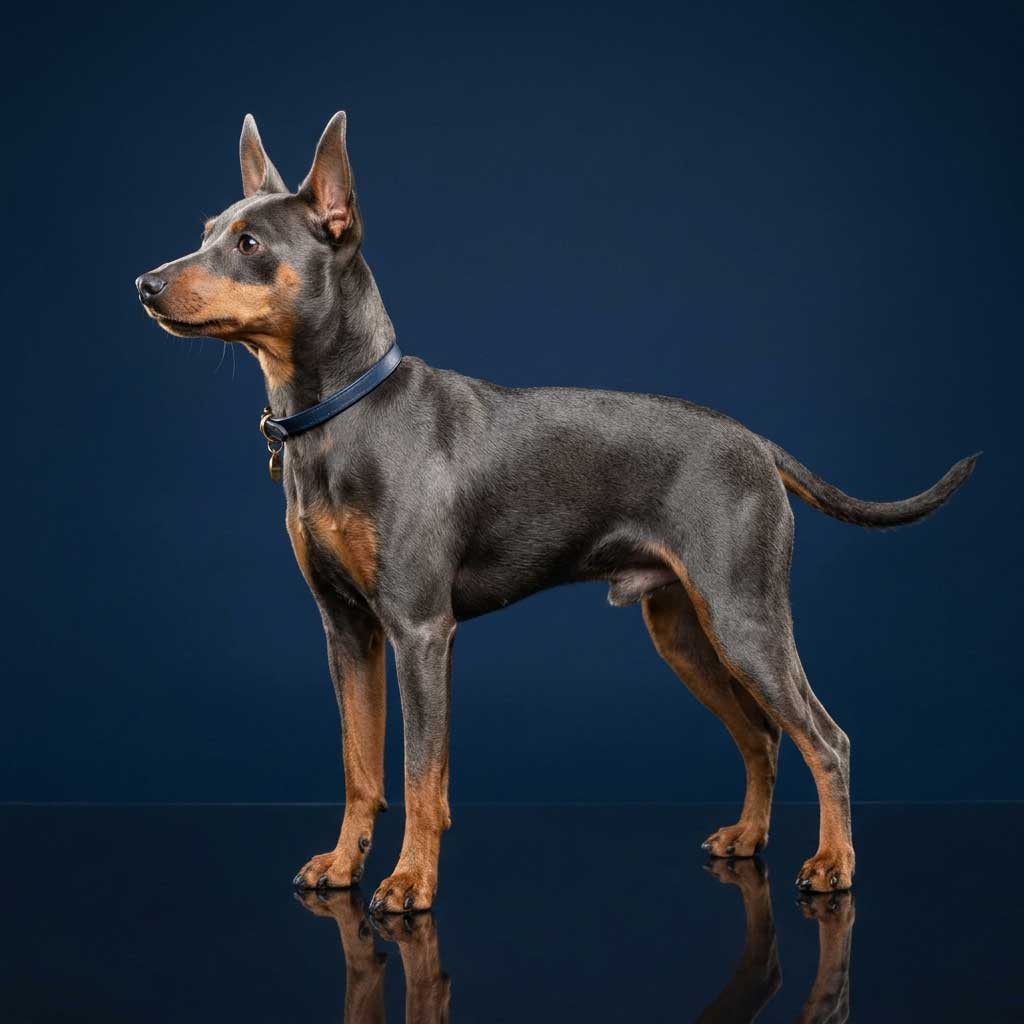
Blue & Tan / Blue & Rust:
A striking slate-grey base coat paired with tan points, caused by a recessive dilution gene affecting black pigment.
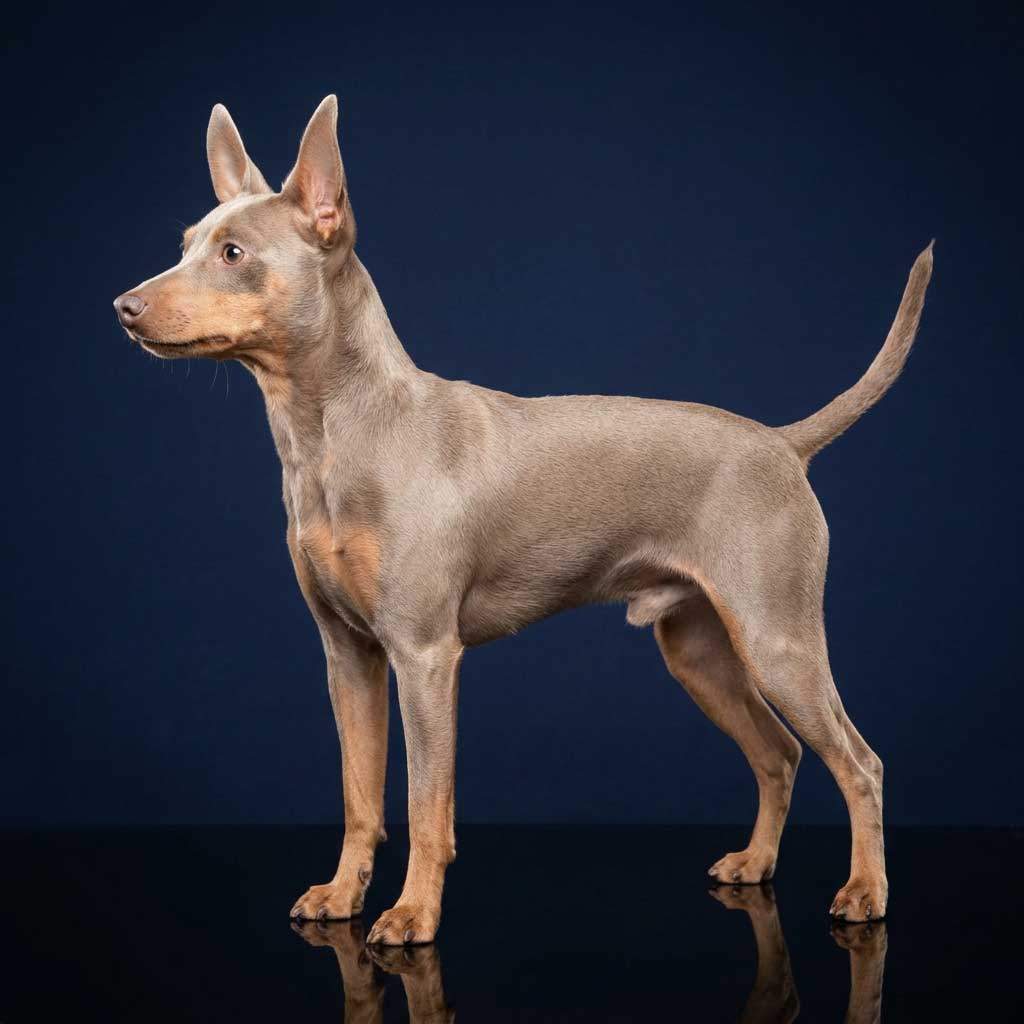
Fawn (Isabella) & Tan:
A rare, pale silvery sandy-fawn base coat with light peach-tan points, resulting from a dilution of the chocolate gene.
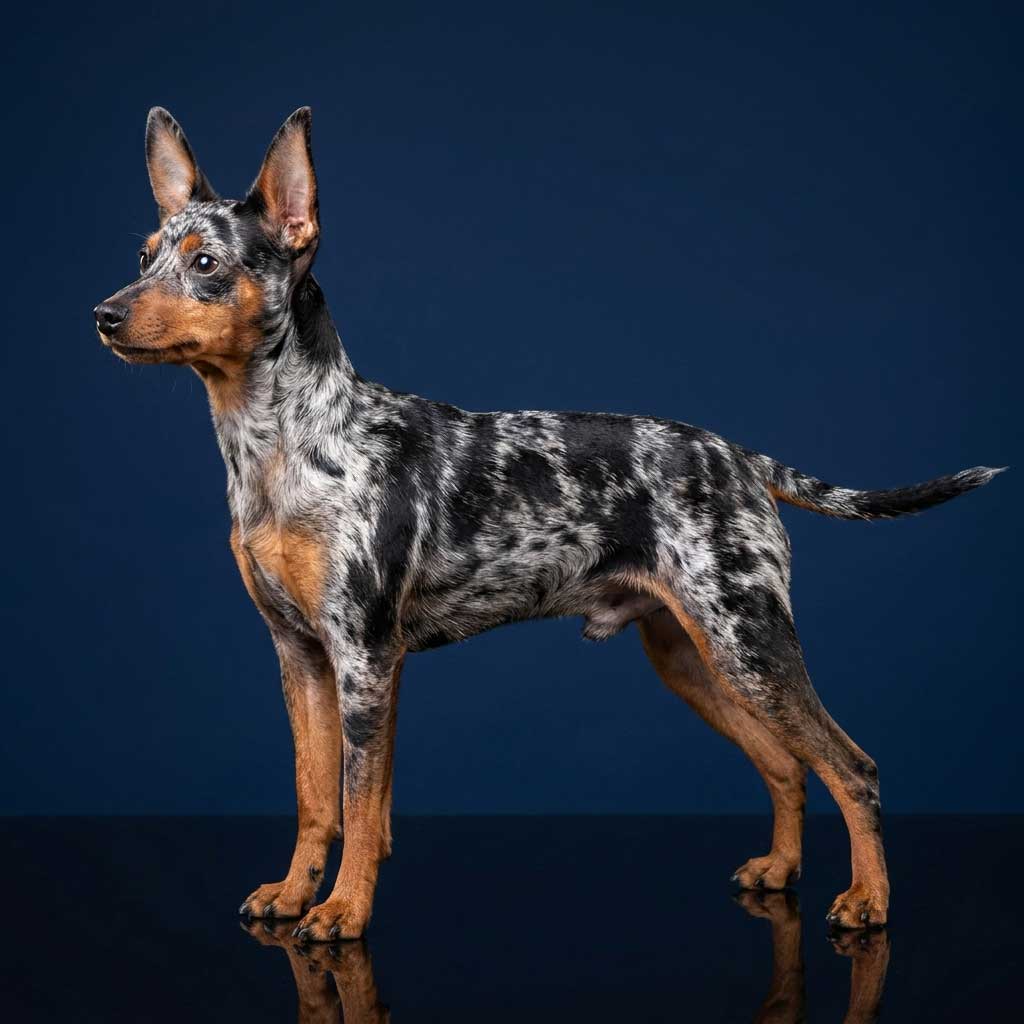
Merle (Harlequin):
A distinct marbled pattern featuring irregular patches of dark pigment on a lighter background.
Note for South African Owners:
While exotic colors are visually stunning, the dilution genes responsible for coats like Blue or Isabella can make the dog genetically prone to Color Dilution Alopecia (CDA), which causes structural hair thinning and localized skin irritation. Breeding two Merle-patterned dogs together also introduces significant risks of congenital blindness and deafness.
The Difference Between a Miniature Pinscher and a Doberman Pinscher
Because they share almost identical coat markings and a homeland, South African pet parents regularly mistake the Min Pin for a toy version of the Doberman. It is important to know the factual distinctions:
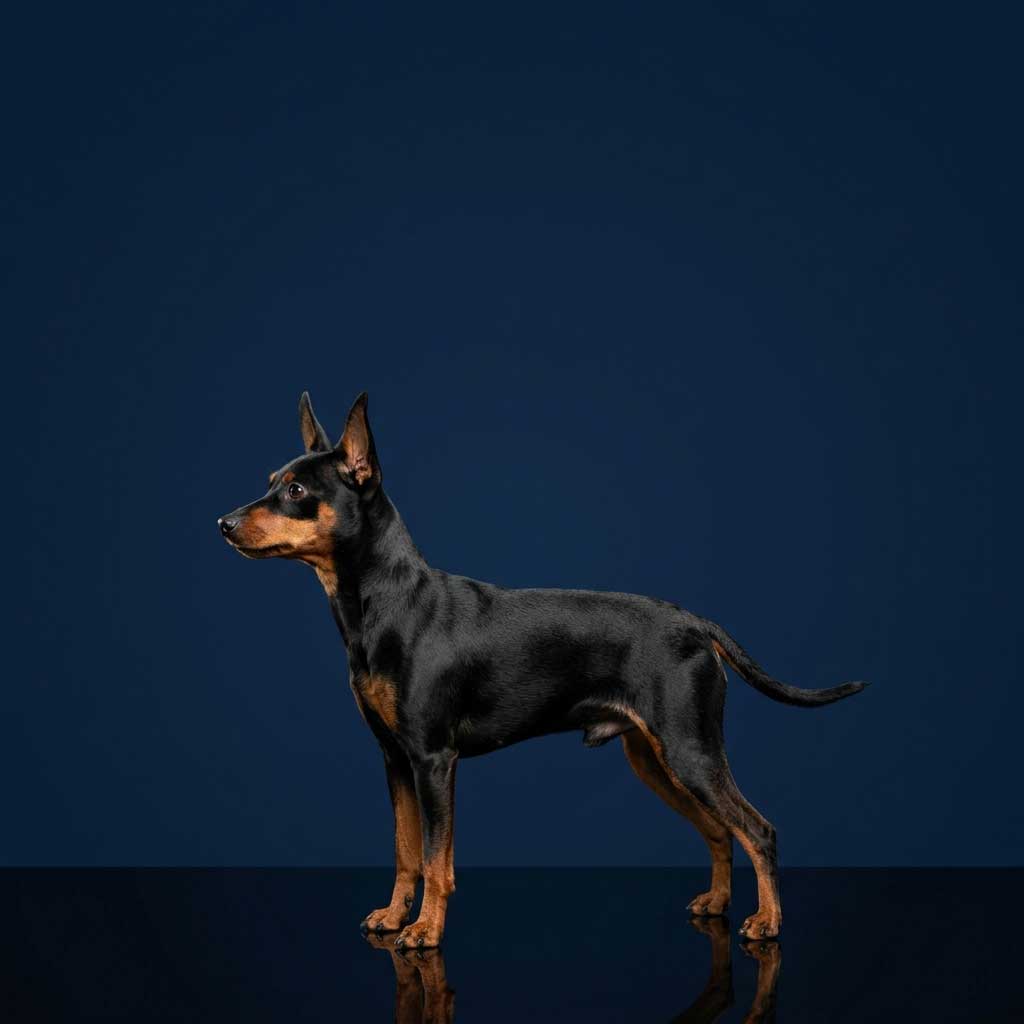
The Miniature Pinscher
Lineage:
A historic, completely independent breed. Developed centuries before the Doberman by crossing stable ratters, Dachshunds, and Italian Greyhounds.
Size:
A true toy breed. They average a light, compact 3.5 to 5 kg and stand roughly 25 to 30 cm tall.
Role & Temperament:
Functions as a spirited, dynamic companion and hyper-alert watchdog. They display a fiery, independent, terrier-like curiosity and a signature high-stepping gait.
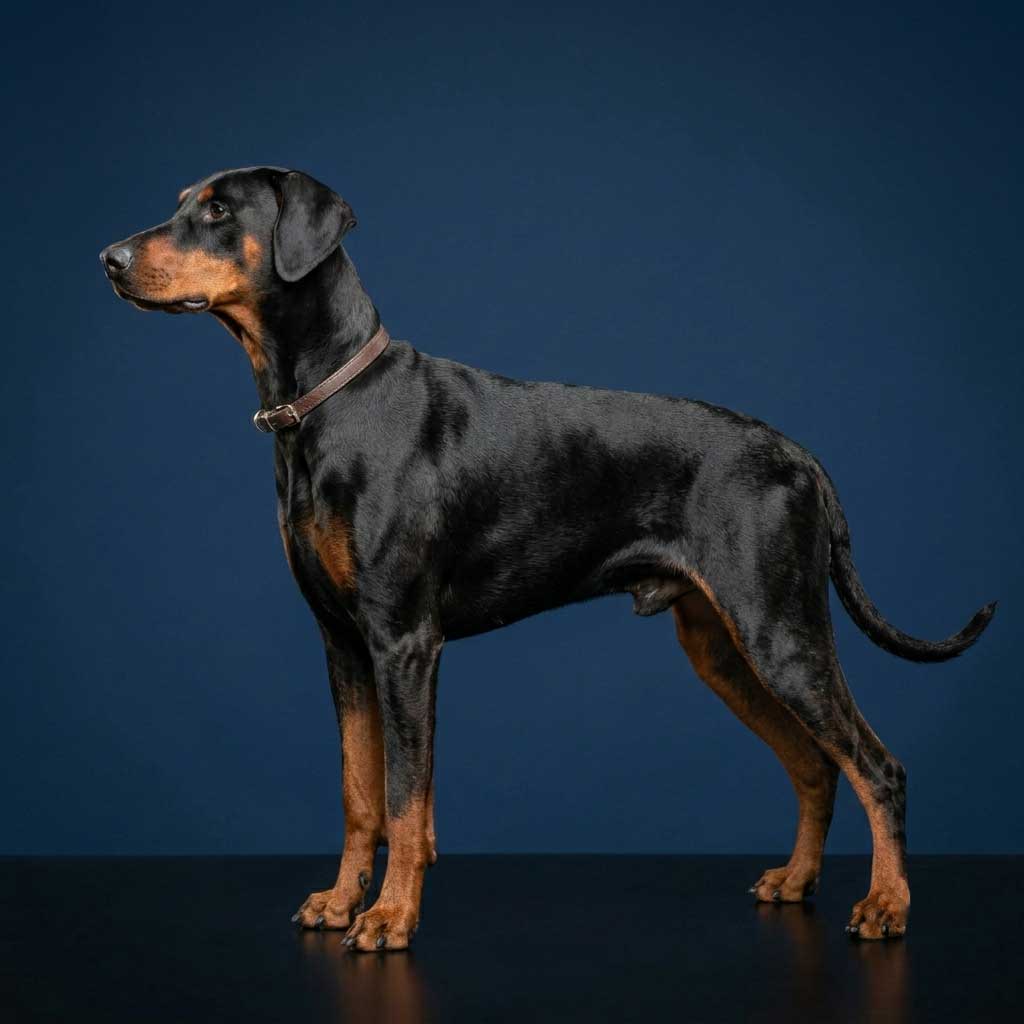
The Doberman Pinscher
Lineage:
Engineered in the late 19th century by a German tax collector specifically as a personal defense guardian, utilizing much larger breeds.
Size:
A large-to-giant working breed. They securely weigh between 32 to 45 kg and stand up to 72 cm tall.
Role & Temperament:
Functions as an analytical, watchful guardian. They are deeply focused on personal protection, highly trainable, and maintain a serious, commanding posture.
Anatomical Spotlight
What is a “Hackney Gait”?
Pronunciation: hack-nee geyt
Derived from the high-stepping trot of historical Hackney carriage horses, this anatomical term refers to the unique, proud movement pattern of the Miniature Pinscher. The dog lifts its front forelegs high up and forward at the wrist joint with a distinct, rhythmic stride. This striking physical characteristic is completely natural to the breed. Learn more in our Dog Anatomy & Breed Terminology Guide.
Everyday Care, Exercise, and Environmental Safety
Exercise Requirements
Do not let their tiny size fool you; Miniature Pinschers are absolute dynamo athletes. They are a high-energy breed wrapped inside a toy-sized body. They require daily physical outlets to prevent behavioral issues born from pent-up energy. Two energetic 30-minute walks a day, combined with vigorous indoor interactive fetch sessions, are essential to keep them physically and mentally balanced.
Escape Mastery and Boundary Security
Min Pins are famous escape artists and possess a deep, instinctive drive to hunt small lizards, mice, and birds.
- Fence Security:
In South Africa, standard boundary walls must be entirely secure. Min Pins are remarkably athletic and are known to agilely climb fences if they spot prey on the other side. They can also squeeze their narrow skulls and bodies through surprisingly small gaps in sliding gates, pool balustrades, or diamond mesh/palisade fencing. - Lead Safety:
Due to their intense prey drive, they should never be walked off-lead in unsecured public spaces, as they will bolt instantly after a scent or a small animal.
Grooming & Maintenance Requirements
The Min Pin is one of the lowest-maintenance breeds when it comes to coat care, making them incredibly clean housemates.
- Coat Care:
Their short, smooth, single coat requires minimal effort. A quick wipe down once a week with a damp cloth or a soft bristle brush is all it takes to remove loose hairs and keep their skin healthy. - Cold Weather Sensitivity:
Because they have a single coat with virtually no body fat, Min Pins freeze easily during chilly South African winter mornings and nights. They genuinely require winter dog jackets or jerseys to stay warm indoors and outdoors. - Nail and Ear Care:
Their nails grow rapidly and must be trimmed or ground down every few weeks. Their neat, erect ears should be checked regularly for dust or debris.
Training and Socialization
Trainability
Min Pins are exceptionally bright, but they possess an independent, headstrong streak. They view themselves as the absolute boss of the household. Training requires a firm, patient, and highly consistent approach using positive reinforcement. If you use harsh corrections, a sensitive Min Pin will simply dig their heels in or shut down.
Socialization Needs
Because they are naturally fearless, a lack of early socialization can cause a Miniature PInscher to develop “Small Dog Syndrome”—becoming overly territorial, vocal, or reactive toward dogs ten times their size. Exposing them gently to varied environments, guests, and other canine companions early ensures they mature into a confident, well-behaved adult.
Common Breed-Specific Health Considerations
While generally an exceptionally hardy, long-lived breed, Miniature Pinschers have genetic predispositions to specific conditions that owners must watch out for:
Patellar Luxation
- A common condition in toy breeds where the kneecap temporarily slips out of its anatomical groove.
- Can cause temporary limping or a “skipping” step, eventually leading to localized arthritis if left unchecked.
Legg-Calvé-Perthes Disease
- A degenerative disease impacting the head of the femur bone in the hip joint, typically surfacing during puppyhood.
- Requires early veterinary identification and often surgical correction to restore pain-free movement.
Progressive Retinal Atrophy (PRA)
- An inherited eye disorder that causes a gradual degeneration of the retina.
- Triggers a slow loss of vision, starting with night blindness and potentially leading to total blindness over time.
Obesity and Dental Crowding
- Because they are small, extra treats quickly cause dangerous weight gain, putting massive strain on their compact joints.
- Their small jaws mean teeth can become easily crowded, requiring diligent dental chew care or veterinary scale-and-polishes to avoid periodontal disease.
Rehoming or Adopting a Miniature Pinscher
Because of their intense energy, vocal alerting habits, and independent streaks, Miniature Pinschers are occasionally surrendered when owners realize they aren’t low-maintenance, sedentary lap dogs.
Many families who find they can no longer manage these dynamic needs ask Small Dog Adoptions & Rehoming (SDA) to assist with “home-to-home” rehoming. A traditional shelter environment can be incredibly stressful for a hyper-alert, highly sensitive toy breed. By coordinating direct, home-to-home transitions, we ensure they move safely, calmly, and predictably from one loving family straight to another without entering a kennel system.
Miniature Pinscher Frequently Asked Questions
Before welcoming a Miniature Pinscher into your life, it is essential to consider their distinct personality traits. Below, we answer the most common questions South Africans ask about managing this spirited breed.
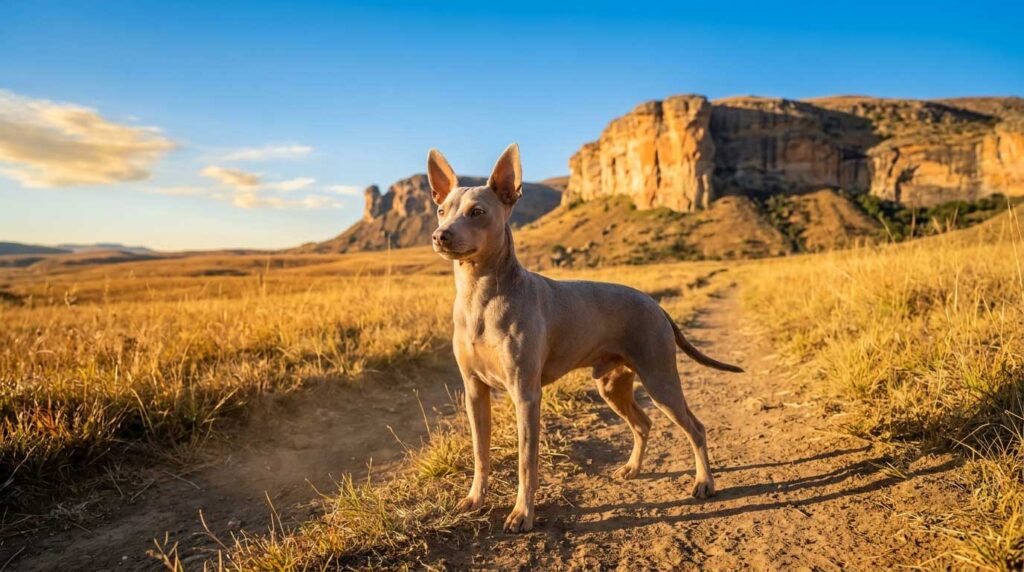
Final Thoughts: Is the Miniature Pinscher Right for Your Home?
Welcoming a Miniature Pinscher into your life means inviting endless entertainment, fiery devotion, and a big-dog personality inside a tiny, neat package. If you can provide them with consistent boundaries, secure fences, protection from winter cold, and an outlet for their athletic minds, you will gain a proud, utterly devoted companion.
Whether you are ready to adopt or are looking for guidance on transitioning an older Min Pin into a new home, we are here to support you every step of the way.
Are you hoping to open your heart to a Miniature Pinscher?
- 🐾 View Our Available Dogs for Adoption
- 📧 Get in Touch with Small Dog Adoptions & Rehoming, if you have any questions or need advice about our home-to-home rehoming process.