
Dog-to-Dog Introduction Guide | The SDA Pack Dynamic Protocol
A successful dog-to-dog introduction is not a casual meeting — it is a structured negotiation of space, safety, and trust.
At Small Dog Adoptions & Rehoming, we specialize in the discreet rehoming of sensitive companions. Breeds such as Maltese, Pekingese, and Miniature Pinschers are emotionally perceptive and highly responsive to their environment. When introductions are handled incorrectly, even a single negative interaction can create lasting anxiety, reactivity, or conflict within the home.
This guide provides a professional, low-arousal protocol designed to ensure calm, safe, and successful integration. Whether you are welcoming your new companion home or facilitating a structured pre-handover meeting, the principles remain the same: calmness, control of environment, and respect for canine communication.
The Foundation:
Start with the Human Handover
A successful dog-to-dog introduction begins long before the dogs meet.
It begins with the emotional state of the humans involved.
If you have not yet completed our human meet and greet protocol, we strongly advise starting here:
The Dog Meet & Greet Guide: Specialist Handover Protocol
This ensures that the new companion is already emotionally regulated and not entering the introduction in a heightened or uncertain state.
🎧 Audio Masterclass:
The Science of Pack Integration
In this session, our specialists explain why managing the environment—not controlling the dogs—is the defining factor in long-term harmony.
The Golden Rule for Dog-to-Dog Introductions:
Manage the Environment – Not the Dogs
In professional canine behaviourism, successful introductions are not achieved through correction or control, but through environmental design.
Dogs do not need to be forced into interaction. In fact, forced interaction is one of the most common causes of conflict.
Instead, your companions require:
– Space to observe
– Calm, predictable human energy
– The freedom to disengage
When pressure is removed, communication becomes natural. When communication is natural, trust follows.
Understanding the Two Introduction Scenarios
Within the Small Dog Adoptions model, there are two distinct introduction scenarios, and each requires a different approach. It is essential that these are not confused.
Scenario A:
The Same-Day Adoption
home introduction
This is the most common and preferred SDA pathway.
The adopting family attends the meet and greet at the current owner’s home. Once the match is confirmed, the adoption proceeds immediately, and the dog transitions directly into their new home on the same day.
Only at this stage does the new companion meet any resident dogs.
Why This Requires Precision
At this point in the process:
- The new dog has already experienced emotional change
- Your home represents established territory for your resident dog
- The risk of tension is significantly elevated if the introduction is rushed
For this reason, the dog-to-dog introduction must be structured with intention.
The Correct Integration Protocol
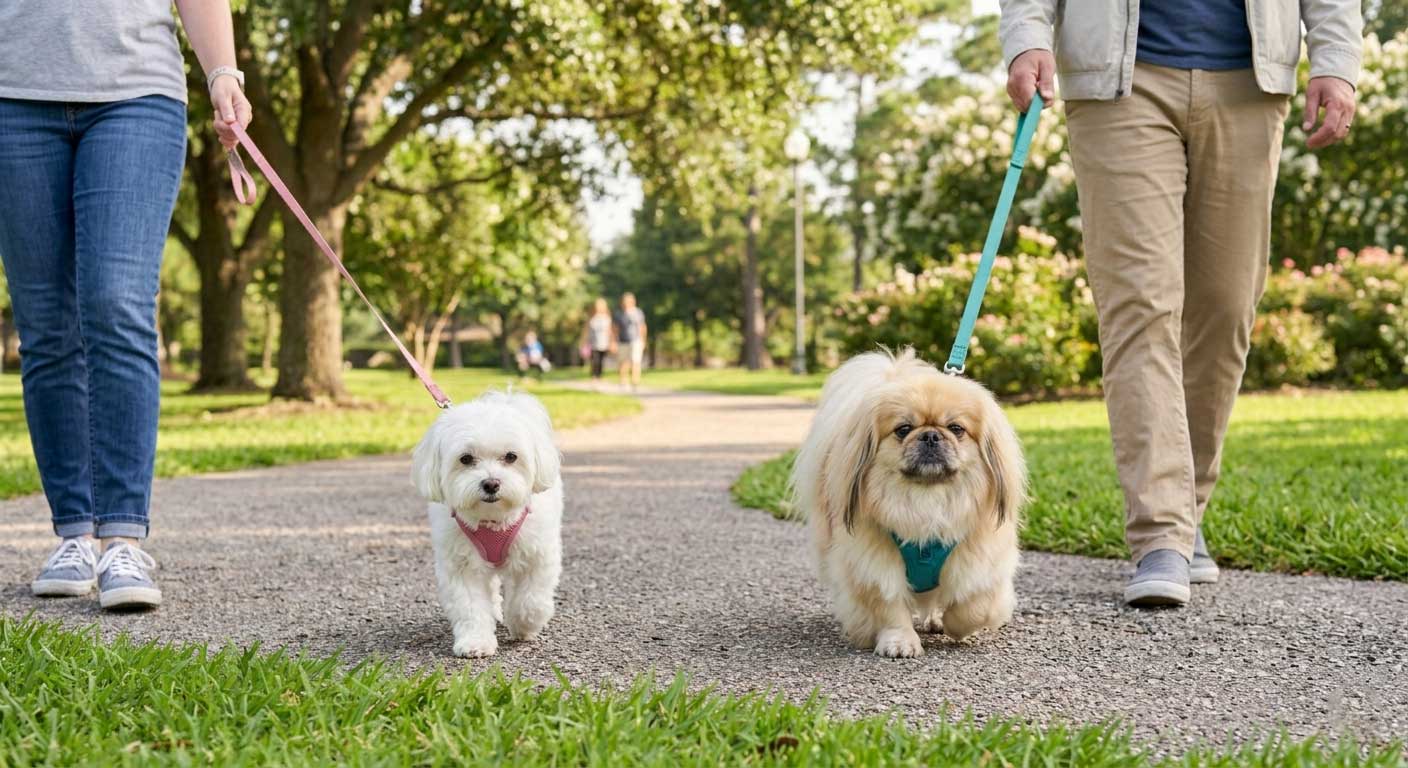
1. The Reset Walk: Before arriving, meet a block away for a short, 5-minute parallel walk. This “packs” the dogs together so they enter the property as a team.
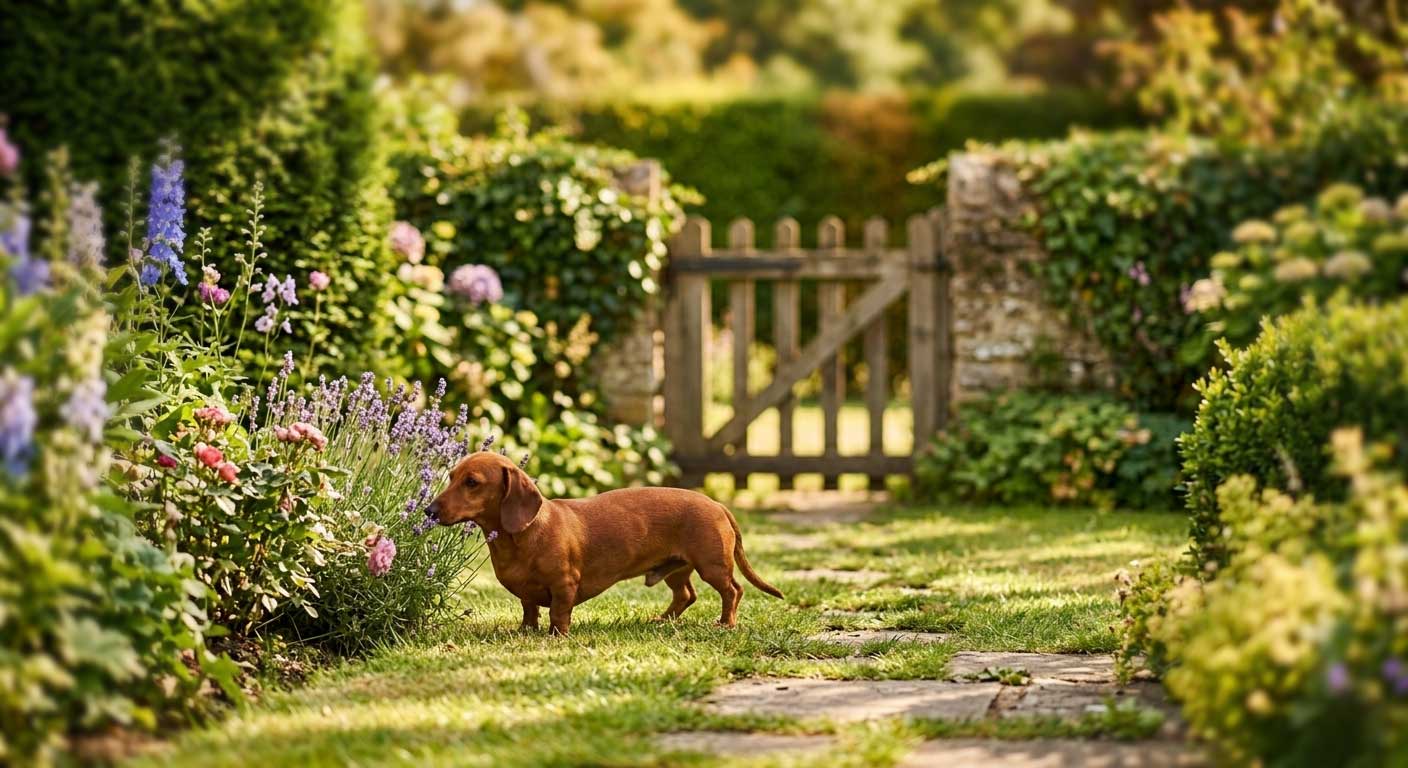
2. Garden First, House Second: Let the new companion explore the secure garden alone for 10 minutes. Then, bring your resident dog out. Once calm, they can enter the house together.
3. The Clean Slate: Before entry, ensure all food bowls, toys, and beds are removed to eliminate 90% of conflict triggers.
Scenario B:
Structured Neutral Ground Introduction
Pre-handover stage
In some cases, the adopting family may wish for their resident dog to be present during the final stage of the adoption process.
It is important to understand that this is not an open or preliminary meeting.
At Small Dog Adoptions, all administrative processes—including application, screening, and adoption confirmation—are completed prior to this stage. The family has already been approved, and the match has been professionally assessed.
This dog-to-dog introduction is therefore a controlled, final-stage integration step, not a casual compatibility test.
The Non-Negotiable Rule: Neutral Territory Only
1. Neutral Ground: This meeting must occur in a quiet, neutral space (like a park), never at the current owner’s home.
2. The Diplomatic Approach (Parallel Walk): Begin with both dogs walking in the same direction, at a distance. This allows them to process each other without confrontation.
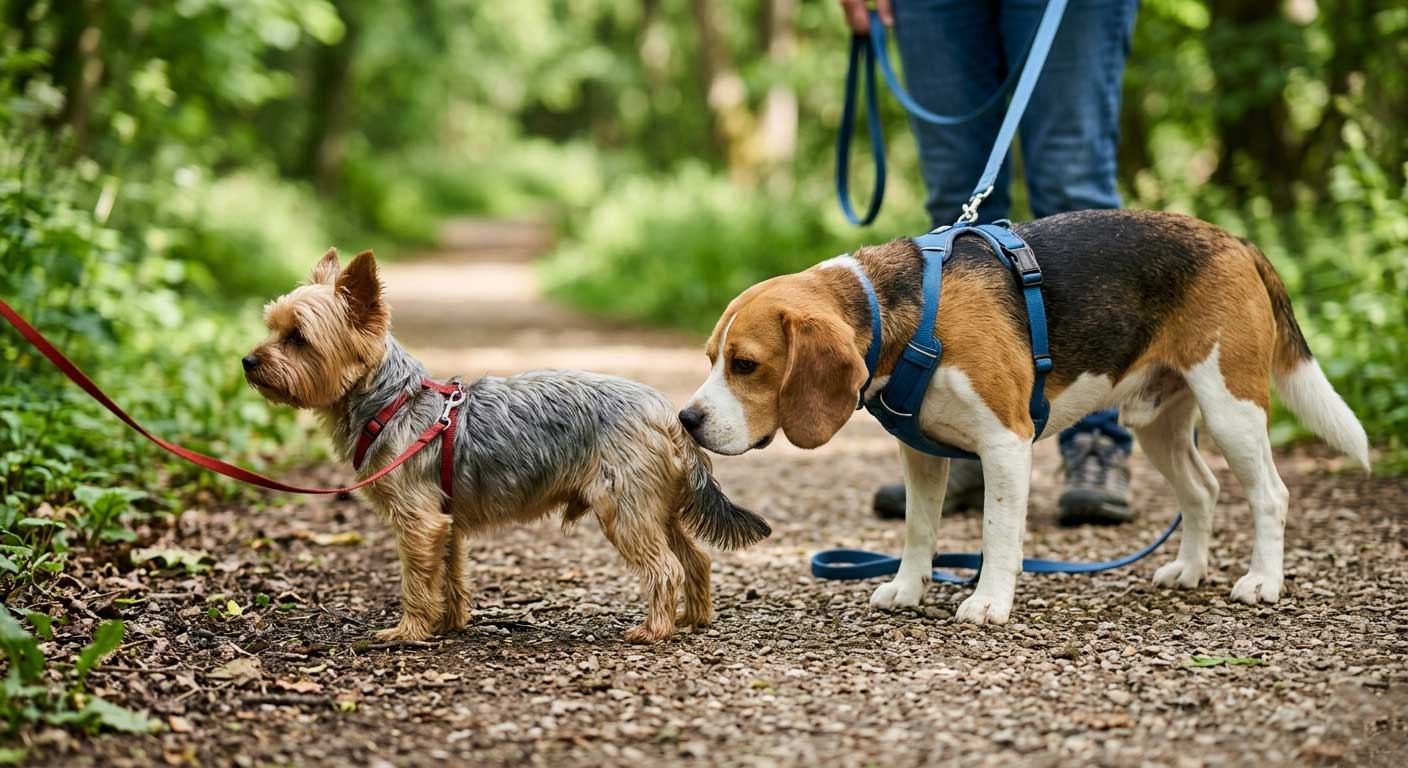
3. The 3-Second Rule: Only if both dogs display relaxed body language, allow a brief, 3-second sniff of the rear. Then, calmly guide them apart.
The Compatibility Protocol: A Specialist Note
We are often asked if families can visit a dog prior to applying, or if resident dogs can ‘test’ compatibility before a final decision is made. At SDA, we adhere to a strict, professional “Application-First” protocol.
Why? Our boutique service operates on a curated, home-to-home basis. To respect the absolute privacy of our surrendering families and to ensure a tranquil, stress-free transition for the dog, we do not arrange speculative “meet-and-greets.”
We view introductions as the final step of a confirmed match. Once your bespoke application package is fully vetted and approved, we facilitate an exclusive introduction.
If a dog-to-dog introduction is required for a resident dog, it must take place on neutral ground (such as a quiet, local park), following our ‘Scenario B: Neutral Ground Protocol’. Introductions never take place at the surrendering owner’s home unless the new family attends the meeting without their resident dog. This boundary is strictly enforced to prevent territorial conflict and ensure the safety of all companions involved.
Reading the Signs: A Specialist’s Guide to Body Language
Dogs communicate continuously through subtle changes in posture, movement, and expression. Understanding these canine body language signals allows you to respond appropriately and prevent escalation. Signs of a successful interaction include relaxed, loose body movement, soft eye contact, and the ability to disengage or ignore the other dog. These behaviours indicate comfort and emotional stability.
Conversely, signs such as stiffness, direct staring, lip tension, or visible stress signals (such as “whale eye”) indicate discomfort. A low growl should always be respected as clear communication, not corrected or suppressed. Early recognition of these signals is the key to maintaining a safe and controlled environment.
Green Flags (Signs of Success)
Play Bows:
The “downward dog” pose.
Ignoring Each Other:
The ultimate sign of comfort.
Loose, “Sloppy” Body Language:
No tension.
Taking Turns Sniffing:
A respectful exchange.
Red Flags (Signs to Intervene)
Stiff, Frozen Body:
The “calm before the storm.”
A Hard, Direct Stare:
A clear challenge.
Lip Curling or “Whale Eye”:
Obvious stress signals.
A Low Growl:
A clear request for space. Listen to it.

The Final Transition:
Defining the New Pack
Small Dog Adoptions & Rehoming operates exclusively on a direct home-to-home model. This eliminates the ‘waiting room’ effect—where dogs linger in stressful environments—and allows the vital decompression phase to begin immediately in their permanent home.
The handover is the precise moment the “Pack Dynamic” begins. To ensure this transition is dignified and professional, follow our Handover Lead-Swap Protocol:
- The Parallel Exit: Once the match is confirmed, both families should walk out of the home together with both dogs. Walking in unison toward the vehicles reinforces a shared “mission” and lowers territorial tension.
- The Lead Handoff: The physical handover of the lead should happen in a neutral space (like the sidewalk or driveway). This silent, calm exchange signals to the dogs that the “guardianship” has officially shifted without the high-emotional drama of a front-door goodbye.
- The Zero-Pressure Journey: Once the new companion is in the vehicle, the departing family should leave swiftly. This prevents the cycle of confusion and “searching” behavior.
- Immediate Decompression: Upon arriving at the new home, the first act should be a short, 5-minute walk around the block before entering the house. This “resets” the dogs’ internal clocks and allows them to enter the home as a unified, calm unit.
The First 72 Hours: Decompression & Coexistence
During the first three days, the goal is not to create friendship, but to establish stability.
All interactions should be supervised, brief, and calm. Dogs should be given regular breaks from one another, using separate spaces if necessary. Calm behaviour—particularly the ability to ignore one another—should be quietly reinforced.
This period sets the tone for the long-term relationship. Patience at this stage prevents problems later.
The SDA Standard: Calmness Creates Compatibility
At Small Dog Adoptions, we do not rely on chance or instinct during introductions. We rely on structure. By removing pressure, managing the environment, and respecting canine communication, we create the conditions for long-term success—not just a successful first meeting.
Prepare for Your Dog-to-Dog Introduction with Confidence
Download your printable one-page Dog-to-Dog Introduction checklist to have on hand for the big day.