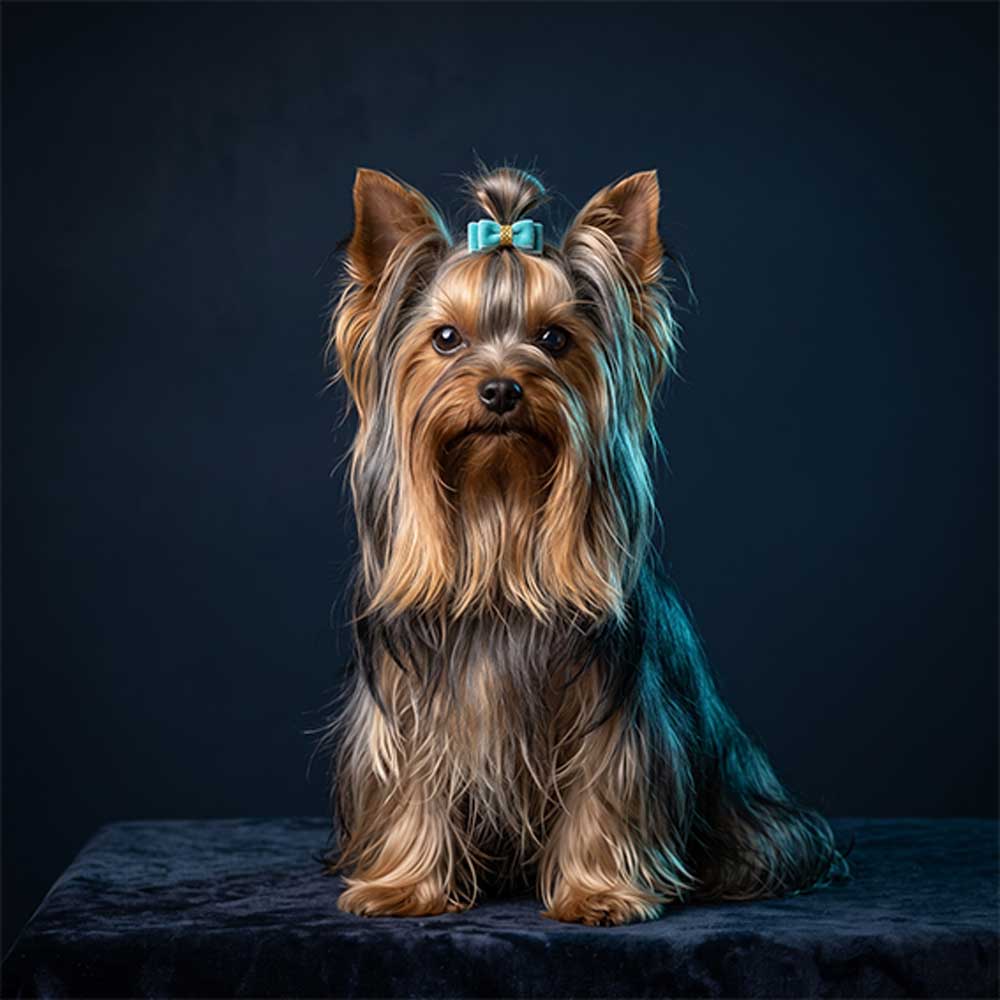
The Complete Guide to the Yorkshire Terrier in South Africa
The Yorkshire Terrier—affectionately known worldwide as the “Yorkie”—is arguably one of the most popular, yet deeply misunderstood, purebreds in South Africa. Beneath the glamorous silk coats and the “handbag dog” reputation lies the beating heart of a true terrier: feisty, relentlessly intelligent, incredibly loyal, and notoriously stubborn.
Are you hoping to open your heart to a Yorkshire Terrier? Here is the absolute baseline of what you need to know.
| Breed Characteristic | Specification |
|---|---|
| Origin | Yorkshire, England (19th Century) |
| Original Purpose | Ratting and vermin control in textile mills and coal mines. |
| Average Weight | Typically 2 to 3.2 kg (Standard), though the South African reality often sees robust pet Yorkies weighing 3 to 5 kg. |
| Average Height | Approximately 20 to 23 cm at the shoulder |
| Lifespan | 13 to 16+ years |
| Coat Variety | Long, silky, fine, and perfectly straight single coat (no undercoat). Highly hypoallergenic. |
| Primary Colors | Traditional Blue & Tan, Black & Gold. (Non-standard variations include Biewer, Biro, and Chocolate). |
| Registration Body | Kennel Union of South Africa (KUSA) – Toy Group (View Official Breed Standard) |
From Coal Mines to High Society
The Yorkshire Terrier’s glamorous modern image often obscures their gritty, working-class origins. Bred in the mid-19th century by Scottish weavers migrating to Yorkshire, these fierce little dogs were originally used to hunt rats and vermin in textile mills and dark coal mines. It wasn’t until the late Victorian era that their stunning coats caught the eye of high society, transitioning them from fearless working terriers to the pampered aristocratic companions we know today.
The SDA Private Protocol: The Reality Behind the Glamour
At Small Dog Adoptions & Rehoming, we have facilitated the transition and rehoming of hundreds of small breeds across South Africa. Through our kennel-free, specialized observation framework, we have seen firsthand where Yorkshire Terrier ownership succeeds brilliantly, and where it catastrophically fails.
The failures rarely stem from a lack of love. They almost always stem from a lack of understanding.
Many families bring a Yorkie puppy into their home expecting a passive lap dog. Instead, they are quickly overwhelmed by intense vocal alerting, rigid stubbornness during toilet training, and skyrocketing veterinary bills caused by preventable dietary or joint issues.
This document forms part of the SDA Private Guidance Framework. It is not a generic overview; it is a boutique, comprehensive masterguide tailored specifically for the South African environment. Whether you are bringing home an eight-week-old puppy, navigating the complexities of a rescue transition, or managing the delicate health of a senior Yorkshire Terrier, this guide will provide the absolute clarity required to ensure your companion thrives.
Welcome to the ultimate authority on Yorkshire Terriers in South Africa.
The Yorkie Spectrum: Colours, Variations, and the “Teacup” Truth
When researching Yorkshire Terriers in South Africa, you will encounter a dizzying array of terms: standard, miniature, pocket, teacup, Biewer, and Biro. Understanding the difference between a recognized breed standard and a marketing gimmick is your first line of defense against unethical breeding.
The Recognized Coat Variations of Yorkshire Terriers
The traditional Yorkshire Terrier is born black and tan, with the black gradually “breaking” or clearing to a stunning blue-steel and gold as they mature. However, due to recessive genes, several breathtaking variations now exist and are gaining massive popularity in SA:
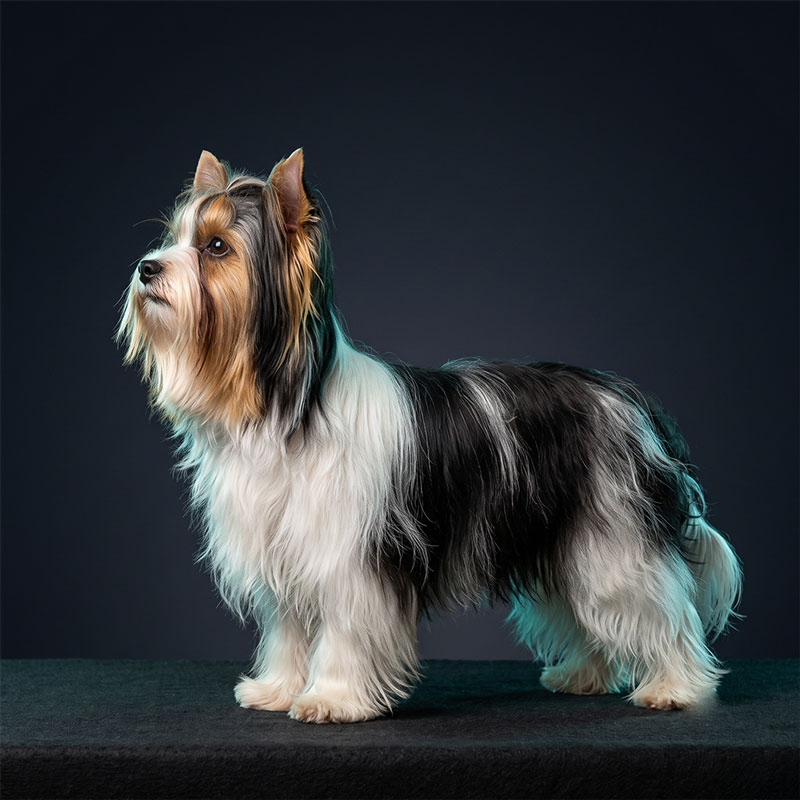
The Biewer Terrier
(Pronounced Bee-vair)
Originating in Germany from a piebald mutation, these rare tricolour Yorkies sport a striking coat of black, white, and gold.
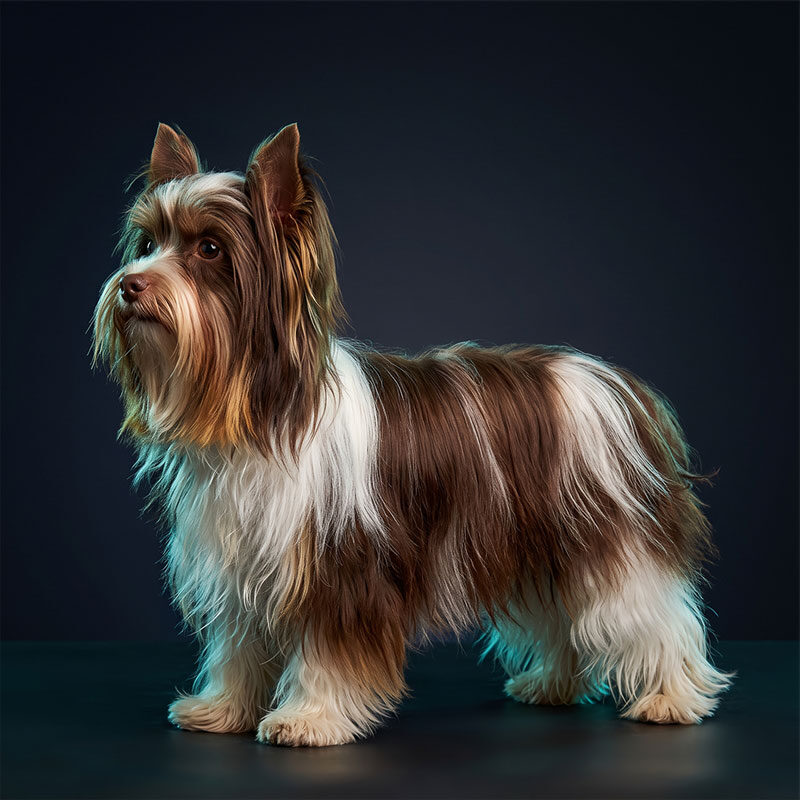
The Biro Terrier
A beautiful variation of the Biewer where all black coat pigment is replaced with a warm, rich chocolate-brown hue.
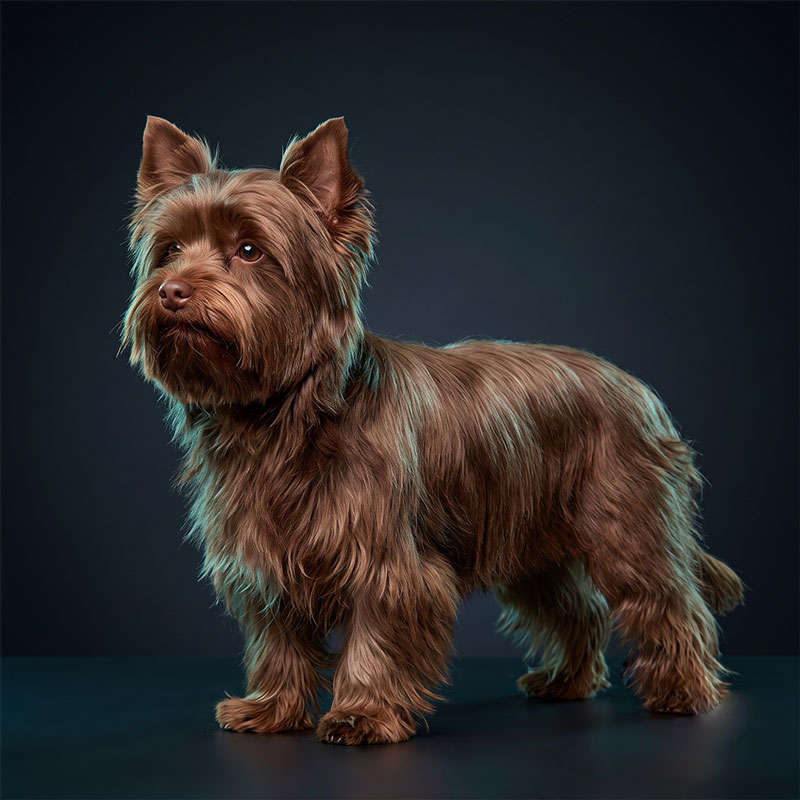
The Chocolate Yorkie
An elegant Yorkie carrying a double-recessive gene that turns all black hair, nose leather, and eye rims into deep cocoa-brown.
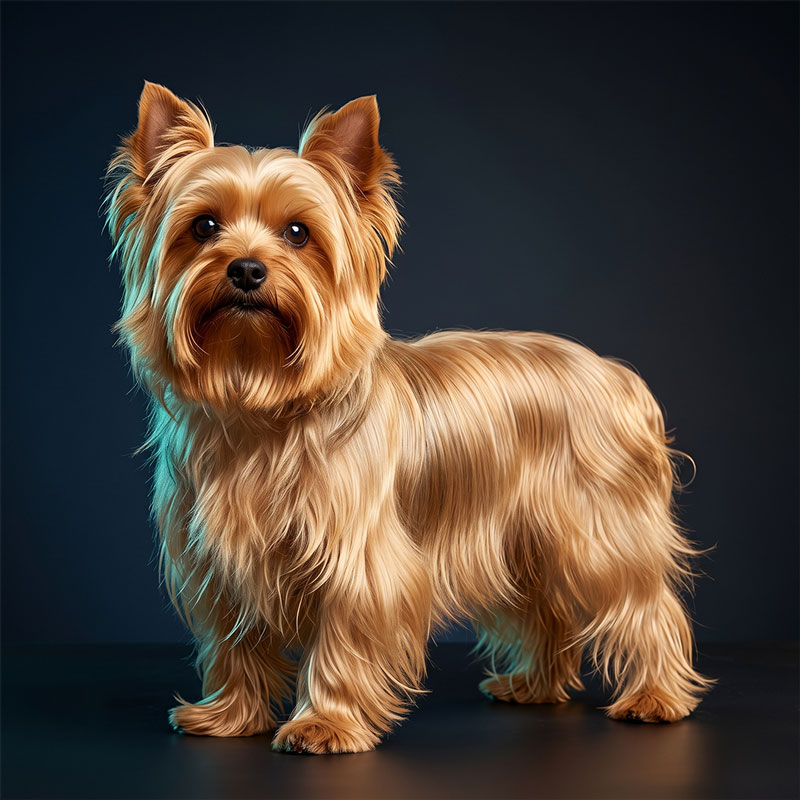
The Golden/Blonde Yorkie
A striking variation where the black saddle never develops, leaving the dog with a radiant, solid gold coat from head to tail.
⚠️ Genetic & Health Alert
The Risk of “Fad” Breeding & Exotic Colors
While breathtaking variations exist naturally, you must approach “rare” exotic colors with caution. Breeding specifically for novel aesthetics over genetics carries serious physiological consequences:
- Dilute Colors (Solid Blue or Albino): Breeding for these specific shades often involves recessive genes that weaken the hair follicle. This is strongly linked to Color Dilution Alopecia (CDA), which causes permanent, patchy hair loss and chronic, painful skin infections.
- Immune System Compromise: Unethical breeding prioritizing coat color over structural integrity often results in a weaker immune system. Always prioritize robust genetics and health over a marketing gimmick.

The “Teacup” Reality Check
Let’s address the most urgent issue in small breed ownership today.
One of the most concerning trends we observe in the South African pet community is the demand for “Teacup” Yorkies. There is no recognized breed called a Teacup Yorkie. The breed standard weight is 2kg to 3.2kg.
When you see a dog marketed as a “Teacup” or “Micro-Mini” (usually weighing under 1.5kg), you are looking at a dog that has been deliberately bred from runts, often suffering from severe inbreeding depression. The biological cost of this miniaturization is devastating:
- Hydrocephalus:
Fluid on the brain due to unfused cranial bones (open fontanelles). - Hypoglycemia:
A fatal drop in blood sugar due to a lack of muscle mass and liver reserves. - Skeletal Fragility:
Jumping off a standard couch can shatter their legs.
If you are offered a “Teacup” puppy in South Africa, walk away. A well-bred, standard-sized Yorkshire Terrier is already a very small dog, perfectly designed to live a robust, active, and healthy 15-year life.
Popular Crossbreeds: The Morkie
While this guide focuses on the purebred Yorkshire Terrier, you will frequently see Yorkie crossbreeds in South African homes and rescues, most notably the “Morkie” (a Maltese crossed with a Yorkshire Terrier).
Because both parent breeds are small and low-shedding, Morkies are incredibly popular. However, their temperament is always a genetic lottery. A Morkie might inherit the softer, slightly more relaxed lap-dog nature of a Maltese, or they might possess the full, fiery stubbornness and vocal alerting of a working terrier.
Regardless of which personality they inherit, Morkies share the exact same physical vulnerabilities as purebred Yorkies. If you are adopting a Morkie, you must still apply the strict rules of this guide: they require daily grooming, meticulous dental care, and absolute adherence to the “harness-only” rule to protect their fragile airways.
Grooming: Beyond the Bow
A Yorkie’s coat is their crowning glory, but it is also their greatest vulnerability if neglected. Unlike most dogs, Yorkies do not have fur; they have hair, similar in texture to human hair. Because they lack an undercoat, they are incredibly low-shedding (making them highly hypoallergenic), but this hair grows continuously and mats rapidly.

The Coat & The Sanitary Trim
If you do not plan to show your Yorkie, a “Puppy Cut” (clipping the hair to a uniform 2-3cm length) is highly recommended for the South African climate. It prevents grass seeds, ticks, and burrs from tangling in the coat during summer.
Regardless of the cut, a Sanitary Trim is strictly non-negotiable. The hair around the anus and genitals must be kept meticulously short. If allowed to grow, faeces will mat into the hair, causing severe bacterial infections, skin necrosis, and blocking the dog from passing stool.
Eyes and Ears
- The Eyes:
The hair on the bridge of the nose must be trimmed flat or tied up securely. Hair rubbing against the cornea causes chronic weeping, tear staining, and painful corneal ulcers. - The Ears:
Yorkies grow hair inside their ear canals. This hair traps moisture and wax, creating the perfect dark, damp environment for yeast infections. Your groomer must gently pluck this internal hair during visits.
The Silent Agony of Long Nails
Because Yorkies are so light, their nails do not naturally wear down on pavement like heavier breeds. Long nails do not just look untidy; they physically alter the skeletal structure of the dog’s foot.
When a nail touches the floor, the pressure pushes the toe backward, causing chronic arthritis and joint pain with every single step. If you hear a “click-click-click” on your tiles, your dog is in pain.
- The Fix:
Train your dog to accept nail grinders early on. Desensitize them by simply touching their paws with the grinder turned off, rewarding them for remaining calm.
The Yorkie Dental Crisis
Yorkshire Terriers are genetically predisposed to severe periodontal disease. Because their mouths are so small, their teeth are often overcrowded, trapping plaque and bacteria. If left unmanaged, this bacteria enters the bloodstream, leading to heart, liver, and kidney disease.
- Retained Baby Teeth:
Yorkies frequently fail to lose their puppy teeth. The adult tooth grows in right next to the baby tooth, causing severe overcrowding and rapid decay. Your vet must extract any retained baby teeth (usually done during their 6-month sterilization). - The Daily Standard:
You cannot rely on dry kibble or chew toys to keep a Yorkie’s teeth clean. Daily brushing with dog-specific toothpaste is the only preventative measure. Without it, you can expect multiple expensive dental extractions under general anesthesia throughout their life.
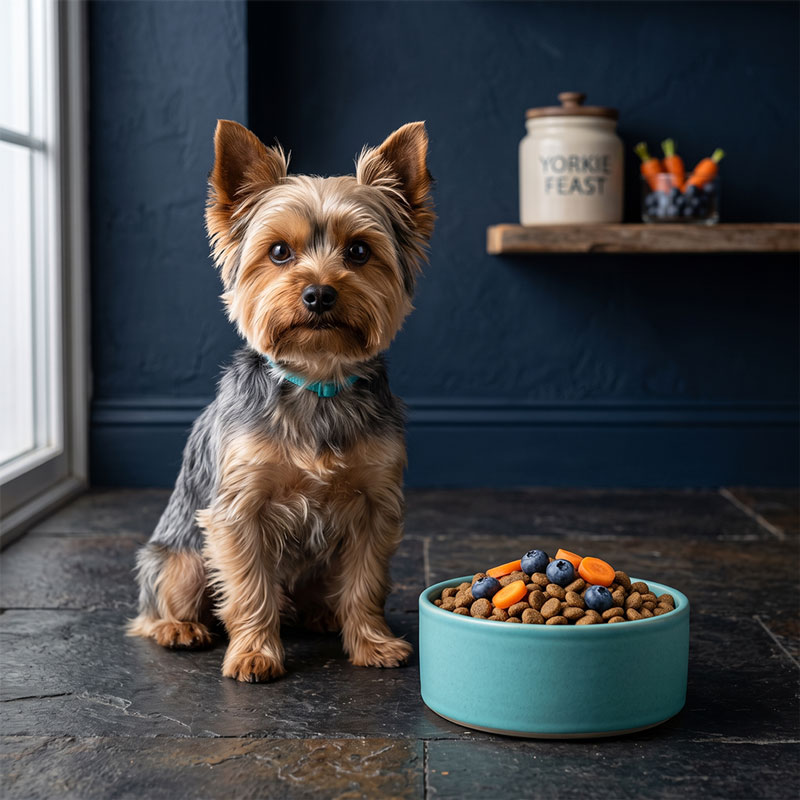
The Nutritional Blueprint & Allergy Management for Yorkshire Terriers
A Yorkie’s digestive system is notoriously sensitive. The debate between kibble, raw feeding, and home-cooked diets is fierce, but the biological reality remains: they require highly bioavailable protein and minimal fillers.
Spotting the Chicken Allergy
Chicken is the most common protein source in commercial South African dog food—and it is one of the leading causes of canine allergies. If your Yorkie is exhibiting:
- Obsessive paw licking (until the fur turns rusty brown).
- Constant ear flapping and scratching.
- Red, inflamed skin on the belly. …they are likely reacting to their food.
The At-Home Elimination Diet
To determine if your Yorkie has a food allergy, you must perform a strict 8-week elimination diet. This means switching to a “novel protein”—a meat they have never eaten before, such as venison, duck, or rabbit. During this 8-week period, they cannot have a single chicken-based treat, chew, or table scrap. If the itching stops, you have your diagnosis.
The SDA Safe & Toxic List
Yorkshire Terriers are prone to hypoglycemia (low blood sugar), so treats should be healthy and functional.
- Allowed:
Blueberries (excellent antioxidants), steamed carrots, and cucumber slices (great for teething puppies). - Strictly Forbidden:
Grapes, raisins, chocolate, onions, and anything containing Xylitol (a sweetener common in peanut butter that is instantly lethal to dogs).
Health, Prevention & The South African Reality
A Yorkshire Terrier is a robust, hardy little dog, provided their environment and medical care are rigorously managed. Because of their small stature, minor medical issues can escalate into life-threatening emergencies within hours.
Boundary Security & Automated Gates
Standard steel palisade fencing in SA typically has gaps of 100mm to 120mm—plenty of room for a Yorkie to slip through into the street. Additionally, automated sliding driveway gates pose a severe, often fatal, crushing risk to toy breeds who lack the speed or spatial awareness to get out of the way. Your boundary lines must be rigorously “Yorkie-proofed” with mesh backing.
The Drowning Risk (The Wet-Hair Anchor Effect)
Yorkies are a high-risk drowning group. They cannot easily pull themselves out of a standard swimming pool if they fall in. Furthermore, once their long, silky hair becomes waterlogged, it acts like a heavy anchor, pulling them down rapidly and exhausting them within minutes. A secure pool cover or solid pool fence is an absolute necessity.
The 6-Month Sterilization Recommendation
The highly recommended 6-Month Sterilization, the standard accepted practice among South African veterinarians is to sterilize at six months of age. The long-term health benefits drastically outweigh the temporary inconvenience of the surgery, potentially saving you thousands of Rands in preventative vet bills.
- For Females:
Spaying eliminates the risk of Pyometra (a rapidly fatal uterine infection that is terrifyingly common in unspayed Yorkies) and drops the risk of mammary cancer to near zero. It also prevents the messy reality of heat cycles in your home. - For Males:
Neutering early prevents testicular cancer, drastically reduces prostate issues, and most importantly for Yorkie owners, halts the urge to fiercely territory-mark (lift their leg) against your furniture.
Breed-Specific Vulnerabilities: Joints and Airways
Two major anatomical weaknesses plague the Yorkshire Terrier breed.
1. Collapsed Trachea (The Strict Harness Rule)
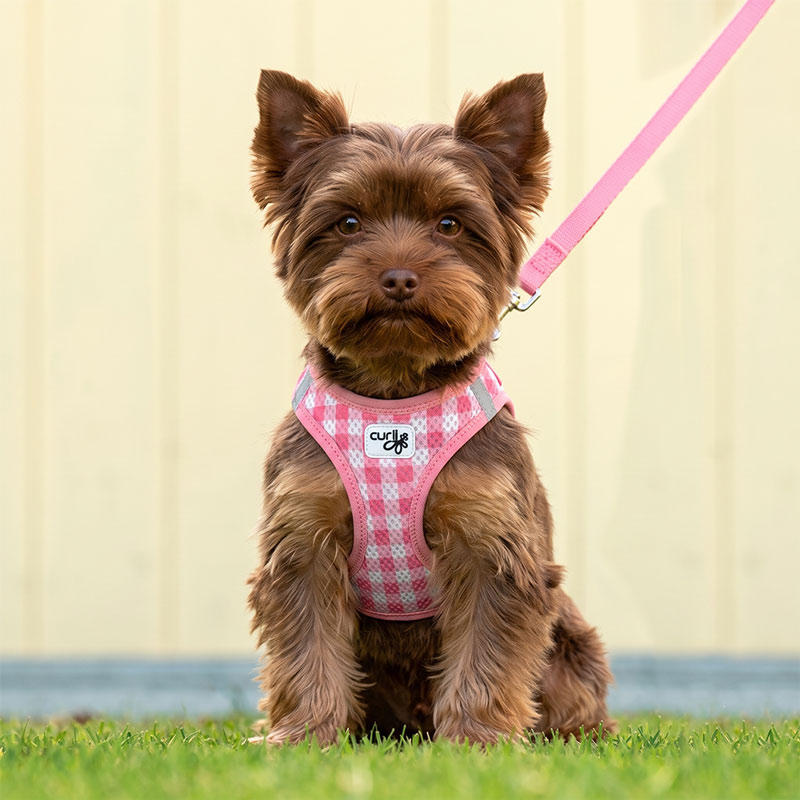
- The SDA Rule: You must never attach a leash to a Yorkshire Terrier’s neck collar. A sudden pull on a collar can instantly crush the trachea. A well-fitted, step-in harness is a mandatory requirement for this breed.
Anatomical Spotlight
What is a “Collapsed Trachea”?
Pronunciation: tray-kee-uh
Tracheal Collapse is a progressive respiratory condition where the cartilaginous rings that keep the windpipe open begin to weaken and flatten. This causes a harsh, “goose-honk” cough. Because Yorkies are genetically prone to this, attaching a leash to a neck collar is highly dangerous. Learn more in our Dog Anatomy & Breed Terminology Guide.
2. Patellar Luxation (Slipping Kneecaps) & Hip Dysplasia Many Yorkies suffer from shallow knee grooves, allowing the kneecap to pop out of place, causing them to suddenly skip or hop on three legs.
- Prevention: The skeletal structure of a Yorkie is not designed to absorb heavy impact. Allowing a Yorkie to jump off a standard bed or couch puts immense, concussive force on their hips and knees. You must train them to use doggy ramps or pet steps from day one.
The SDA Insurance Strategy Because conditions like Collapsed Trachea and Patellar Luxation require expensive orthopedic or soft-tissue surgery, we strongly advise against adopting a Yorkie without medical cover. For our South African clients, we consistently recommend Dotsure Pet Insurance for their rapid payout times and comprehensive cover for hereditary conditions. Do not wait for an emergency to realize you need it.
Vaccinations & The Parvovirus Threat
Parvovirus is highly contagious, incredibly resilient in the South African environment, and almost always fatal to small breed puppies.
Your Yorkie puppy must receive a strict schedule of three vaccinations (typically at 6, 9, and 12 weeks of age). Until 14 days after their final shot, your puppy’s paws must not touch public ground. No parks, no pet stores, and no walking on the pavement.
(SDA Specialist Tip: Senior dogs still require regular vet checks and booster vaccinations. Ask your vet about “titre testing” to check your senior dog’s immunity levels before over-vaccinating them in their old age).
Breeding, Pregnancy, and Whelping
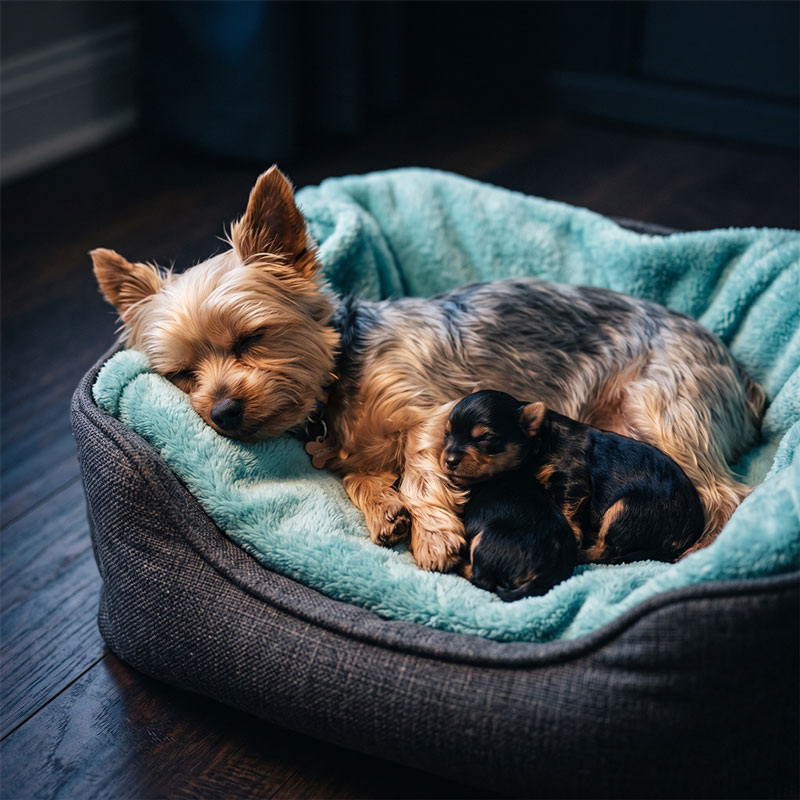
We strongly discourage casual breeding. The myth that it is “good for a female to have one litter” is medically false. Breeding Yorkshire Terriers is a high-risk, high-stress endeavor that often ends in emergency veterinary intervention.
If your dog is already pregnant, you must be prepared for the realities:
- Gestation:
A Yorkie pregnancy lasts approximately 63 days. - C-Section Risks:
Due to their narrow pelvises, Yorkies frequently require emergency Cesarean sections if a puppy becomes stuck in the birth canal. - Eclampsia (Milk Fever):
A sudden, lethal drop in the mother’s blood calcium levels while nursing. Symptoms include stiff legs, panting, and seizures. This is a drop-everything veterinary emergency. - The 8-Week Rule:
Puppies must never be separated from their mother before 8 weeks of age. Removing a puppy at 6 weeks severely damages their bite-inhibition and socialization, leading to deeply ingrained behavioral issues later in life.
Behavioural Mastery & Training
There is a widespread misconception that because a Yorkshire Terrier is small, they do not require formal training. This belief is the root cause of the “Small Dog Syndrome” so prevalent in South Africa. Yorkies are working terriers; without boundaries, their intense intelligence quickly turns into neurosis, guarding, and demanding behaviour.
Toilet Training: Overcoming Terrier Stubbornness
Yorkies are notoriously difficult to toilet train. They are incredibly sensitive to cold and wet weather, meaning a Yorkie puppy in a South African winter will often flat-out refuse to step onto damp grass, preferring your expensive living room rug.
- The Proximity Rule:
A Yorkie puppy has a tiny bladder and limited spatial awareness. If they are playing in the lounge, they will not walk all the way to the back door to relieve themselves. You must carry them to their designated spot immediately after waking, eating, and vigorous play. - The Silence Protocol:
When you take them outside, do not speak, play, or make eye contact until they have finished. If you distract a Yorkie, they will forget why they are outside, only to remember the moment they step back onto your carpet.
Separation Anxiety & The Kong Protocol
Because they bond so intensely with their owners, Yorkies are highly prone to severe separation anxiety. If a Yorkie panics when you leave, they will bark incessantly, destroy property, and even harm themselves trying to escape.
You must teach your dog that your absence is a positive experience.
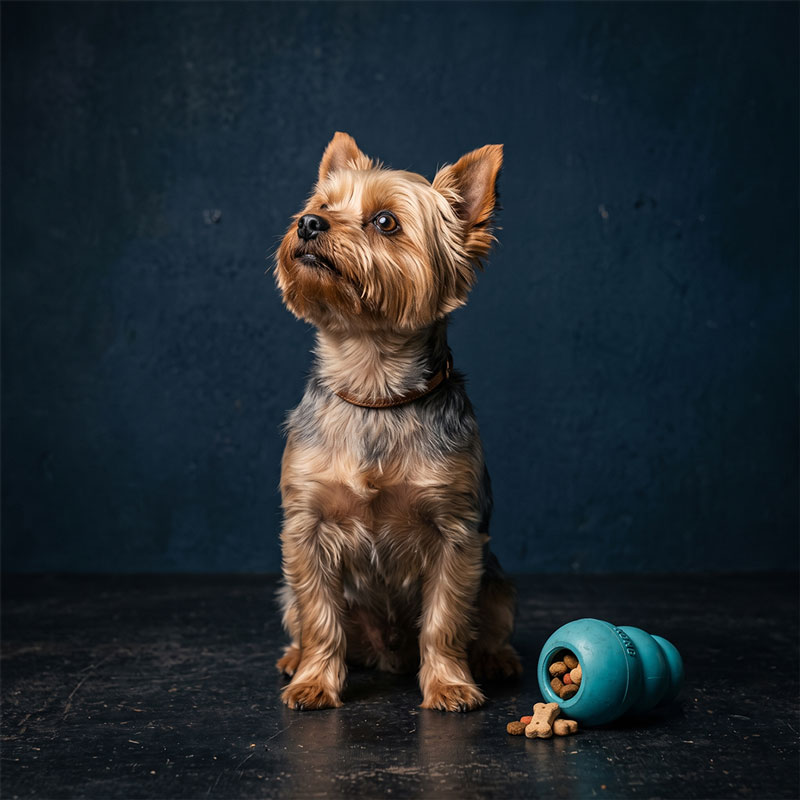
- The Kong Protocol:
Purchase a durable rubber Kong toy. Stuff it with high-value, safe food (like a smear of dog-safe peanut butter or plain yogurt) and freeze it. Your dog only receives this Kong when you leave the house. It must never be given freely. This creates a powerful association: your departure equals a high-value reward that takes 30 minutes of focused mental energy to finish. - Neutral Departures:
Never say long, emotional goodbyes. When you leave, simply place the Kong down and walk out the door silently.
Curbing the Bark: The Alerting Instinct
A Yorkie was bred to alert their owners to vermin or intruders in dark mineshafts. They will bark. You cannot train the bark out of a terrier, but you can manage it.
- Acknowledge and Redirect:
Shouting “No!” at a barking Yorkie only makes them think you are barking along with them. Instead, calmly acknowledge the alert (“Thank you, I see it”), and immediately call them to a designated bed or mat. Reward the silence. - Window Management:
If your Yorkie spends hours staring out the front window barking at pedestrians, you are allowing them to rehearse a highly stressful, adrenaline-fueled behaviour. Close the blinds or restrict access to that room.

The Growing Family: The Baby Protocol
Many Yorkies are surrendered when a family brings a newborn baby home. Because Yorkies are small and fragile, they are often terrified of unpredictable toddlers, leading to defensive snapping.
Preparation must begin months before the baby arrives.
- Scent and Sound Desensitization:
Play sounds of babies crying on YouTube at a low volume while your Yorkie eats, gradually increasing the volume over weeks. Bring a blanket that smells like the newborn home from the hospital before the baby arrives. - The “Look but Don’t Touch” Boundary:
A Yorkie should never be forced to interact with a baby. Set up a secure playpen or high-sided bed that the dog can retreat to, which is strictly off-limits to crawling toddlers. - The Toddler Years:
As your baby begins to crawl and walk, you must supervise 100% of interactions. A toddler falling onto a fragile 4kg dog can easily break the dog’s back, or trigger a severe defensive bite. Teach children to gently stroke the dog’s back, never reaching over their head or pulling their ears.
Socialization: Expanding the Perimeter
Because of their small size and terrier tenacity, Yorkies can easily become reactive (often mistaken for “aggression”) if they are not socialized correctly. A Yorkie that has never been exposed to the world will view every passing dog or stranger as a mortal threat.
The Right Way to Socialize
Socialization does not mean forcing your small terrier to play with a boisterous Labrador at a chaotic dog park. True socialization means teaching your dog to remain calm and neutral in the presence of stimuli.
- Distance is Key:
Sit on a park bench with your Yorkie in a harness. Let them watch other dogs and people pass by from a safe distance of 10 meters. Every time they look at a dog and remain quiet, reward them with a high-value treat. You are teaching them that the world is safe as long as they stay near you. - Controlled Introductions:
When introducing a Yorkie to another dog, avoid overwhelming face-to-face greetings. Instead, utilize the SDA protocol of a parallel walk. Walking side-by-side on loose leashes in neutral territory allows the dogs to scent and assess each other safely without the pressure of direct, head-on confrontation.
Cats and Other Pets
Yorkies were bred to hunt small, furry creatures. If you bring a Yorkie into a home with a cat, you must manage the introduction meticulously. The dog must be on a leash, and the cat must always have a high escape route (like a cat tree) that the Yorkie cannot reach. Reward the dog heavily for ignoring the cat.
The Senior Years: Longevity and Grace
The Yorkshire Terrier is one of the longest-living breeds in the canine world. It is incredibly common for a well-cared-for Yorkie to reach 15 or 16 years of age. (In fact, an unofficial record holder for the world’s oldest dog was a Yorkie named Jack, who reportedly lived to 25 years old in the UK!).
However, the senior years require a shift in how you manage their environment.
Cognitive Decline and Comfort
As Yorkies enter their twilight years, they may experience canine cognitive dysfunction (similar to dementia). They may begin to pace at night, stare at walls, or forget their toilet training.
- Environmental Predictability:
Do not rearrange the furniture. A senior dog relies heavily on spatial memory to navigate if their eyesight (due to common cataracts) or hearing begins to fail. - Joint Relief:
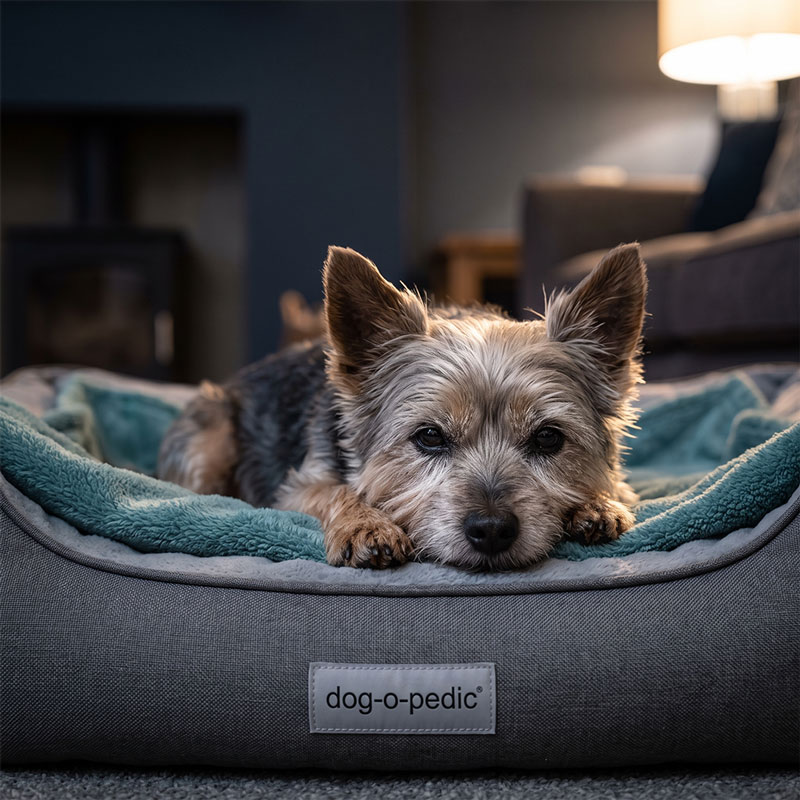
Arthritis is inevitable in older dogs. Ensure their beds are orthopedic and located away from drafts. Ramps become even more critical now; a senior dog should absolutely never be allowed to jump. - Dietary Adjustments:
Senior Yorkies require lower-calorie diets (to prevent obesity, which strains bad joints) but highly digestible proteins to maintain muscle mass.
Conclusion: The Privilege of Ownership
Owning a Yorkshire Terrier in South Africa is an immense privilege, but it is not a passive experience. They demand active engagement, strict boundaries, and an unwavering commitment to their unique physical and psychological needs.
When you invest the time to understand the terrier brain—when you provide them with the security of routine, the safety of a harness, and the mental stimulation they crave—you will unlock one of the most fiercely loyal, deeply affectionate companions in the canine world.
At Small Dog Adoptions & Rehoming, we believe that education is the ultimate form of animal welfare. By equipping yourself with the knowledge in this guide, you are ensuring that your Yorkie lives the vibrant, secure, and healthy life they deserve.
Welcome to the SDA family.

Rehoming or Adopting a Yorkshire Terrier
Because of their fragile physical structure, specialized grooming needs, and tendency toward severe separation anxiety, Yorkshire Terriers are occasionally surrendered when owners underestimate their care demands and veterinary costs.
Many families who find they can no longer manage these needs ask Small Dog Adoptions & Rehoming (SDA) to assist with “home-to-home” rehoming. A traditional shelter environment can be incredibly overwhelming for a sensitive, high-alert breed like the Yorkshire Terrier. By coordinating direct, home-to-home transitions, we ensure they move safely and calmly from one loving family straight to another.
Looking to Adopt?
Do you want to adopt a Yorkshire Terrier?
Finding the right dog starts with matching your lifestyle to the perfect breed.
Explore our carefully vetted collection of small dogs waiting for their forever homes in South Africa.
Need to Rehome?
If your circumstances have changed and you need to find a new home for your Yorkie, we offer a compassionate, shame-free solution. We understand that finding a safe place to rehome a Yorkshire Terrier in South Africa can be stressful. Let SDA assist you with our secure, home-to-home rehoming service. or visit our dedicated specialist division at SA Yorkie Rehoming.
Yorkshire Terrier Frequently Asked Questions
Before welcoming a Yorkshire Terrier into your life, it is essential to consider their distinct personality traits and physical needs. Below, we answer the most common questions South Africans ask about managing this spirited breed.
Health & Grooming
Because of their unique coats and small stature, Yorkies require a proactive approach to their physical care. Understanding their specific vulnerabilities is the key to preventing expensive veterinary emergencies.
Behaviour & Training
A Yorkie may look like a lap dog, but they have the sharp, active mind of a working terrier. Establishing clear boundaries early on is essential to prevent neurotic behaviors.
Adoption & Rehoming
Welcoming a rescue Yorkie into your home is a deeply rewarding experience, but it requires patience and realistic expectations. Here is what you need to know about the transition.